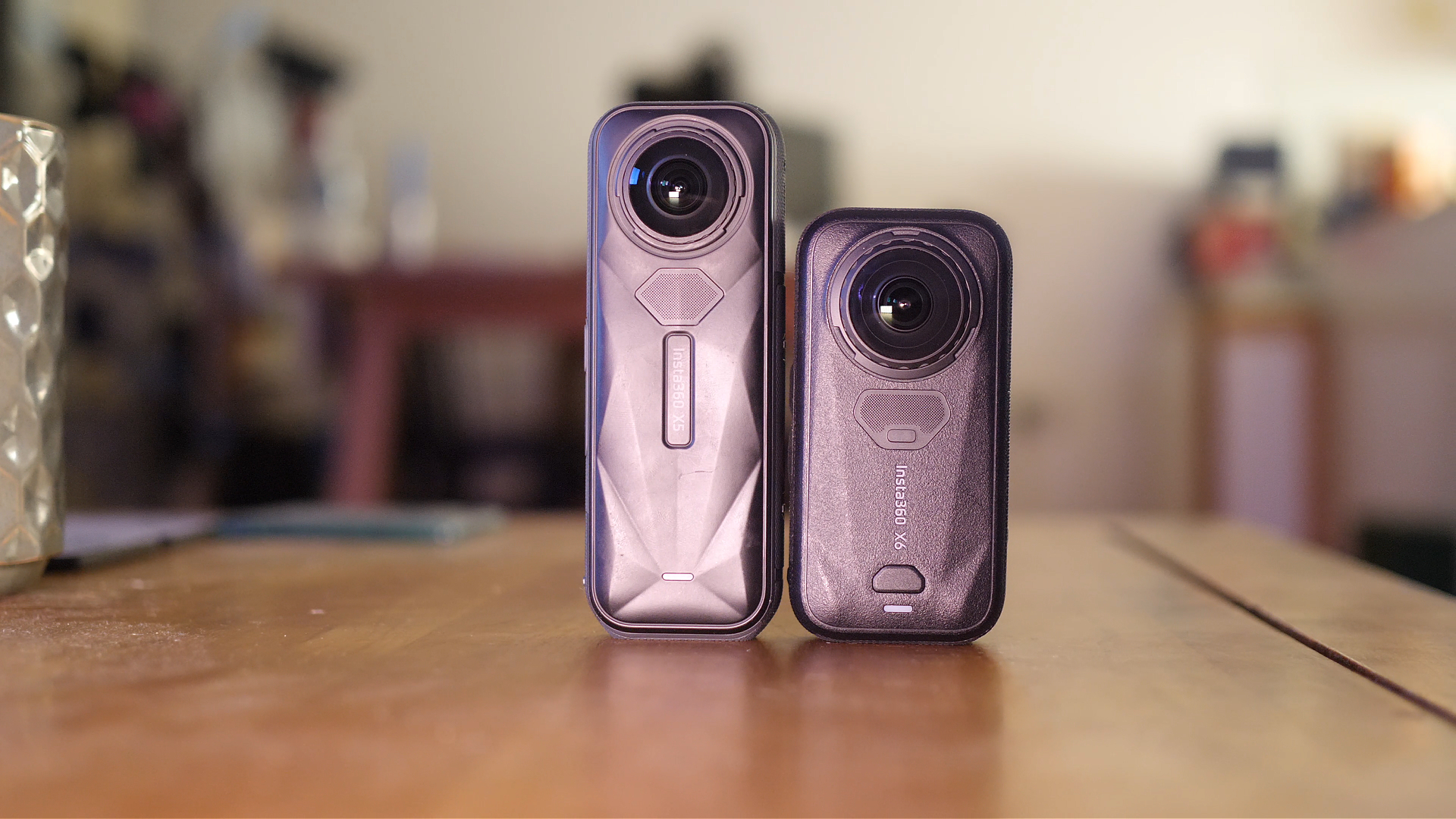


Are you looking for a 360 cameras that’s capable of shooting decent looking immersive videos or photos in difficult lighting conditions? I’ve been testing four 360 cameras with the best specs side by side to see which one works best at night.
Cameras in general are more difficultly to use at night, even if surrounded by bright city lights, but 360 cameras particularly struggle in these conditions. 360 cameras use two or more fish eye lenses to capture the full 360 field of view and these types of lenses are not known for their low light capture ability.
Sensor size is perhaps the most important factor in determining how well a camera will work in low light, and once again most 360 cameras feature small sensors which are not capable of capturing the amount of light necessary.
There are a few 360 cameras with larger sensors that have a decent shot at capturing acceptable footage in dark conditions, if you are willing to tinker with the manual settings. So let’s take a look the 360 cameras I picked out for this task and see which comes out on top.
Best 360 Cameras for Low Light Shooting
Comparison Table
[wpsm_comparison_table id=”116″ class=””]
I selected these cameras for this low light comparison as they have specs that put them ahead of other 360 cameras when it comes to low light shooting. Each has larger sensors than average, with the 1 Inch 360 Edition and Ricoh Theta Z1 having the largest at 1 Inch.
These two can be considered semi-pro 360 cameras and have a price tag to match They are larger and bulkier than most other 360 cameras.
The QooCam 3 (read full review) and X3 have smaller sensors but are also around half the price of the other two and are small/light enough to be used as action cameras.
In my experience the Theta Z1 performs very badly when shooting video regardless whether it’s night or day, but it can shoot very high quality 360 photos. The QooCam 3 is the newest and cheapest of these 360 cameras and claims to be best in class for low light capture; let’s find out if that’s true.
Low Light Video Tests
The below images are screenshots of videos shot with each camera. I set each camera to manual mode and selected the best ISO & Shutter Speed settings depending on the situation, but all cameras were set up the same way.

The first test was particularly challenging for the cameras as there was hardly any light on this bridge at night, with the only illumination coming from the buildings or traffic crossing the bridge.
The Theta Z1 performs the worst as suspected. The QooCam 3 picks up more detail than the rest but this comes with a fair amount of noise. The two Insta360 cameras don’t capture this noise but are more blurred.

Once again the QooCam 3 does seem to capture more details than the other cameras, which is pretty impressive as it’s by some way the cheapest of the 4. The 1 Inch 360 Edition has slightly larger sensors and also does s decent job, once again capturing the least amount of noise which is pretty important if you want usable footage.
For all of these videos I set the ISO to 640 with the shutter speed at 1/30. The videos would be brighter if I set the ISO higher, say to 1000 or even 1500, but then they would all be very noisy and grainy. To keep things fair I set the same ISO for all cameras.


I made a conscious choice to find particularly dark location to shoot with minimal light from city lights to really put the cameras though their paces. If I were to shoot in Times Square or Piccadilly Circus which a huge amount of artificial light then there wouldn’t be a big improvement in the image quality of all these cameras but it probably wouldn’t be a great way to test them out.

For this last shot I eliminated the Ricoh Theta Z1 as it clearly wasn’t performing well in these video tests. The QooCam 3 and Insta360 cameras are more closely matched, with the X3 probably the worst performing out of the three.
The difference between the QooCam 3 and Insta360 1 Inch Edition is pretty minimal; perhaps a the 1 Inch Edition edges ahead but it’s a fairly close call.
You may be thinking that none of these shots from any of the cameras look particularly great; but remember these cropped and zoomed in pretty heavily. Also 360 camera just are never going to be the best choice for low light, but you do get the ability to capture everything around you at once.
You can get excellent low light video if you set up your camera correctly and shoot in areas with decent artificial light coverage. See the below video shot with the Insta360 X3 for some examples.
Low Light Photo Tests
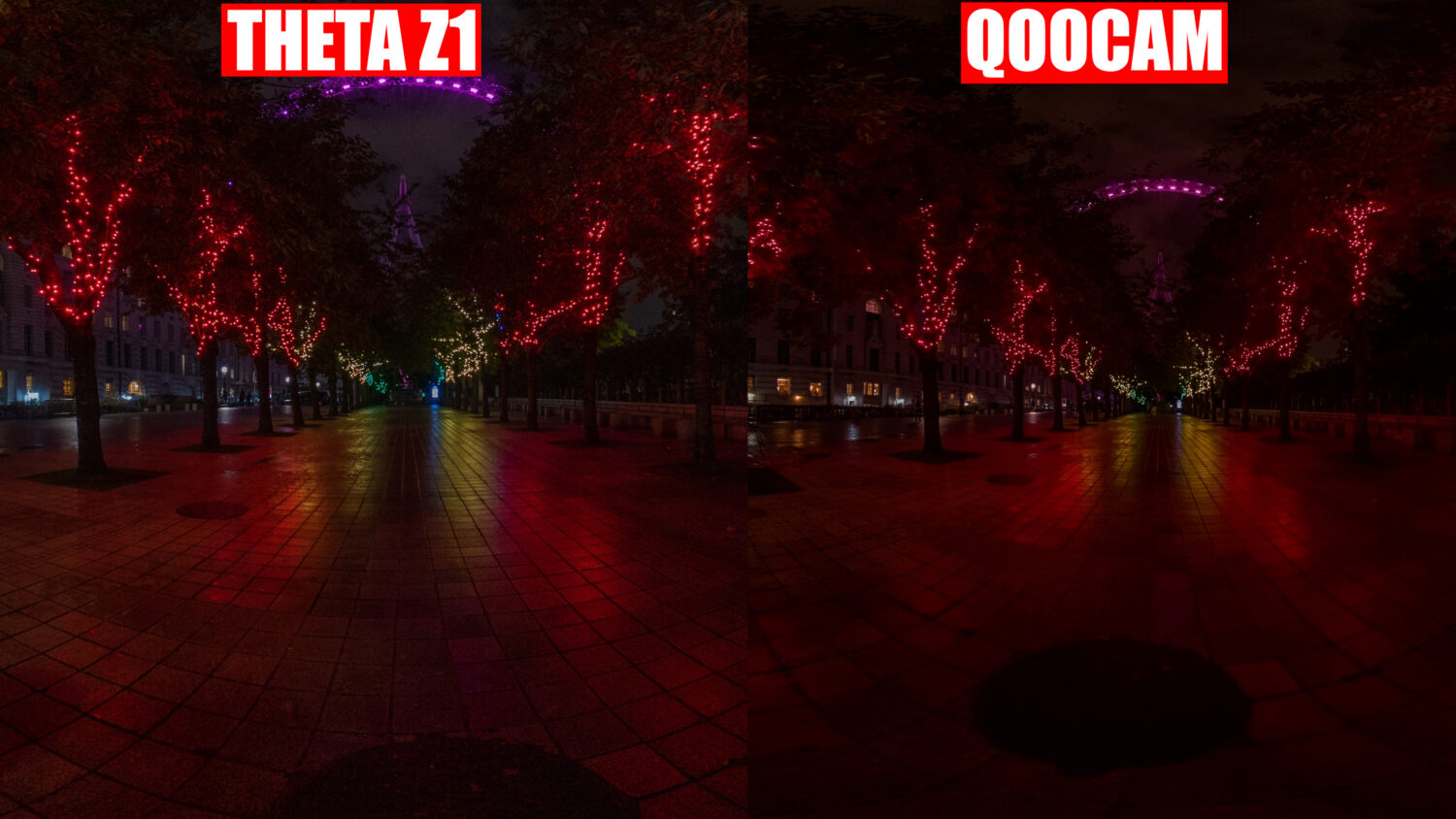
Now let’s take a look at some 360 photos shot in the same locations with the same cameras. The results are actually a different story compared to shooting with video; particularly with the Theta Z1 which performs much better when shooting photos.
You can view the images in their 360 format in the virtual tour window below. The images have been labelled with the camera they were shot with so you can see exactly how each 360 image compares.
Each of these cameras is capable of shooting DNG RAW images which allows for much higher quality photos after some editing. I used this setting for all cameras and went through the workflow to edit the images to get the best quality possible.
When shooting in the DNG mode each camera requires the use of their respective image processing software, all three of which are free. You then need to use a program like Adobe Lightroom or Photoshop to edit the images. Those programs are not free but are really necessary to get the quality you see in the examples I’ve shown
Insta360 cameras have an automated mode called “Pureshot” which uses the cameras free software to try and do the edits for you. This can work well sometimes but it’s not as good as manually doing the edits yourself.

Overall I think the Ricoh Theta Z1 shoots the best quality 360 images, even if they are a bit noisier than I’d like. The dynamic range, colours and details captured with the Z1 surpass any of the other three. The noise could be reduced with some editing in a program like Lightroom, which you would need to use anyone if you chose to use this camera.
The QooCam 3 is a close second with very high quality 360 images which given its price is pretty impressive. You could certainly use the QooCam 3 is a semi-professional setting.
The Insta360 camera seem to be able to capture brighter 360 images but this tends to blur out some details and make the images look a bit flat. These cameras also shoot higher resolution images which may help with keeping everything looking sharp.
Summary
Having looked at the results of these tests I’m most impressed with the QooCam 3; it can shoot relatively high quality 360 video AND photos in low light for under $400. This defiantly makes it the best value of all the camera tested.
For video the Insta360 1 Inch 360 Edition definitely came out on top; it can shoot 6K resolution video and can do so with the least noise. The 1 Inch sensors are definitely making a bit of a difference here. Next best is the QooCam 3 which is under half the price; you can decide for yourself if the difference is worth the price.
When it comes to photography I think the Ricoh Theta Z1 is the best option if you can deal with the unfortunate amount of noise (which like I said can be reduced in editing). All the other cameras also do a decent job, but the quality will heavily depend on how you set up your camera.
Why don’t you check out my Ultimate 360 Camera Comparison Table with info on all the 360 cameras available right now.