
 The 360 Guy
The Insta360 X6 is the most capable consumer 360 camera I have tested, but to be fair I say that with every iteration of this camera – the question is whether it’s worth the price. The X6 produces the best overall video quality in this category, performs noticeably better in low light and combines excellent hardware with an editing ecosystem that remains comfortably ahead of the competition.
It is also the most expensive mainstream consumer 360 camera so far.
That creates an awkward question. As 360 cameras become more powerful, are they also beginning to move beyond what most casual users are willing to spend?
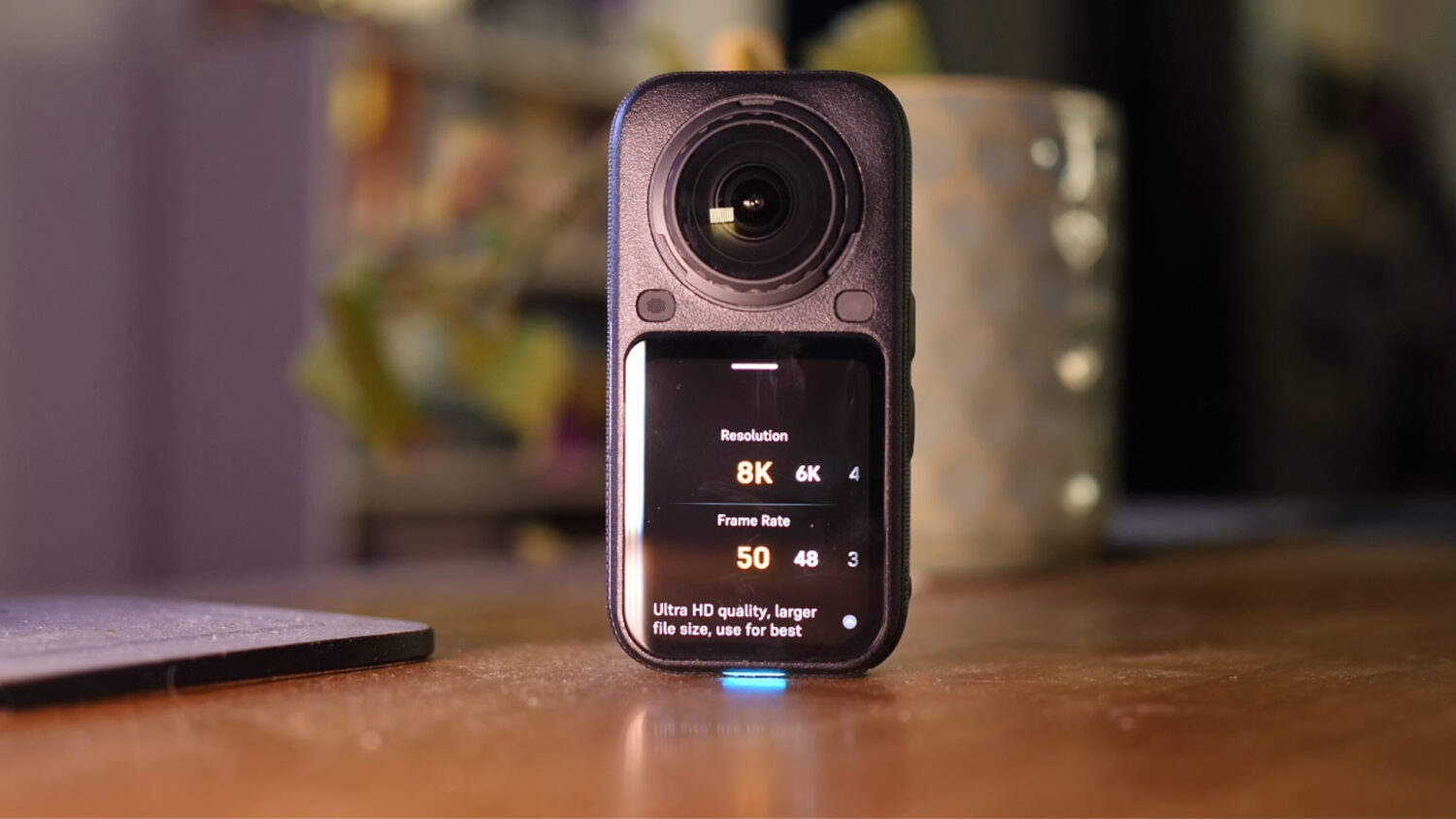
I have tested the Insta360 X6 in daylight, at dusk and at night, as well as using its new recording modes, redesigned body and updated app features.
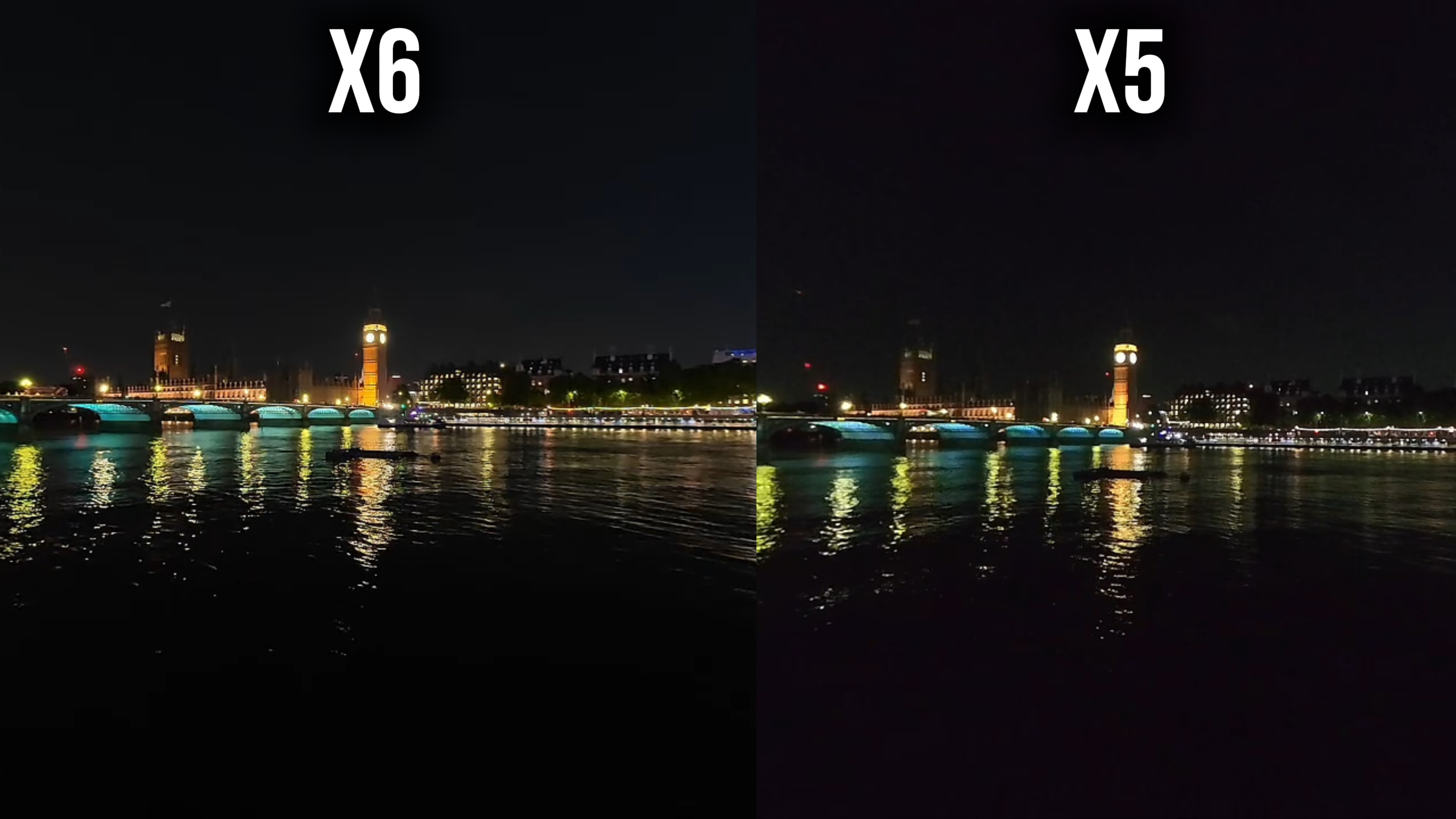
There is no doubt in my mind that this is the best consumer 360 camera Insta360 has made. The harder question is whether its improvements are large enough to justify the price.
Insta360 X6 review: quick verdict
The Insta360 X6 is the best consumer 360 camera available overall. Its dual 1/1.1-inch sensors produce cleaner low-light footage, improved dynamic range and more natural detail, while 10-bit colour makes a real difference in sunsets and other scenes with gradual colour changes. Battery life is better, the screen is larger and brighter, and the addition of 47GB of usable internal storage is more useful than it may sound.
Insta360 also continues to offer the best combination of camera hardware and editing software. The app includes more automatic effects and increasingly capable AI tools, while manual reframing still gives you creative options that a conventional action camera cannot match.
However, this is an expensive camera. At $699/£619 for the Standard Bundle and $799/£709 for the Essentials Bundle, it is becoming harder to describe the X-series as an easy purchase for casual users. Although anyone using the links in this review will get a free lens replacement kit, so that’s something. I also dislike the lack of a conventional physical shutter button, the app remains more confusing than it should be, and render times have become quite long unless you have a powerful system.
My overall verdict: if you want the best consumer 360 camera and can afford it, buy the X6. It is not a revolutionary leap, but it may be approaching the limit of what current compact 360-camera hardware can achieve. That could also make it a camera you keep for several years rather than replace with the next annual update.

Insta360 X6 pros and cons
| Pros | Cons |
|---|---|
| Best overall consumer 360 video quality I have tested | Expensive for a consumer 360 camera |
| Clear improvement at dusk and at night | No conventional physical shutter button |
| 10-bit colour with much less visible banding | App is still confusing for manual editing |
| 8K 360 video at up to 50fps | 8K50 is less convenient for NTSC workflows |
| Noticeably better battery life | Longer export times |
| 47GB of usable internal storage | New body makes some older accessories incompatible |
| Easier replaceable-lens system | Some AI tools are demanding on your phone |
| Best mobile editing ecosystem in the category | Dolby Vision support currently feels limited |
Insta360 X6 specifications
| Feature | Insta360 X6 |
|---|---|
| Sensors | Dual 1/1.1-inch-type sensors |
| Maximum 360 video resolution | 8K at up to 50fps |
| 10-bit video | Yes |
| Dolby Vision | Yes |
| Maximum 360 photo resolution | 120MP |
| Maximum single-lens video | 5K at 60fps |
| Super-wide single-lens video | 5K at 30fps |
| Maximum timelapse resolution | 8K |
| InstaFrame output | Up to 4K at 30fps |
| Internal storage | 47GB usable storage |
| Battery | 2600mAh |
| Claimed maximum runtime | Up to 233 minutes under specific settings |
| Waterproofing | 20 metres without a case |
| Replaceable lenses | Yes |
| Weight | Approximately 195g |
Maximum battery life is measured under specific settings and conditions. Recording at demanding resolutions and frame rates will produce a shorter runtime.
Design and handling
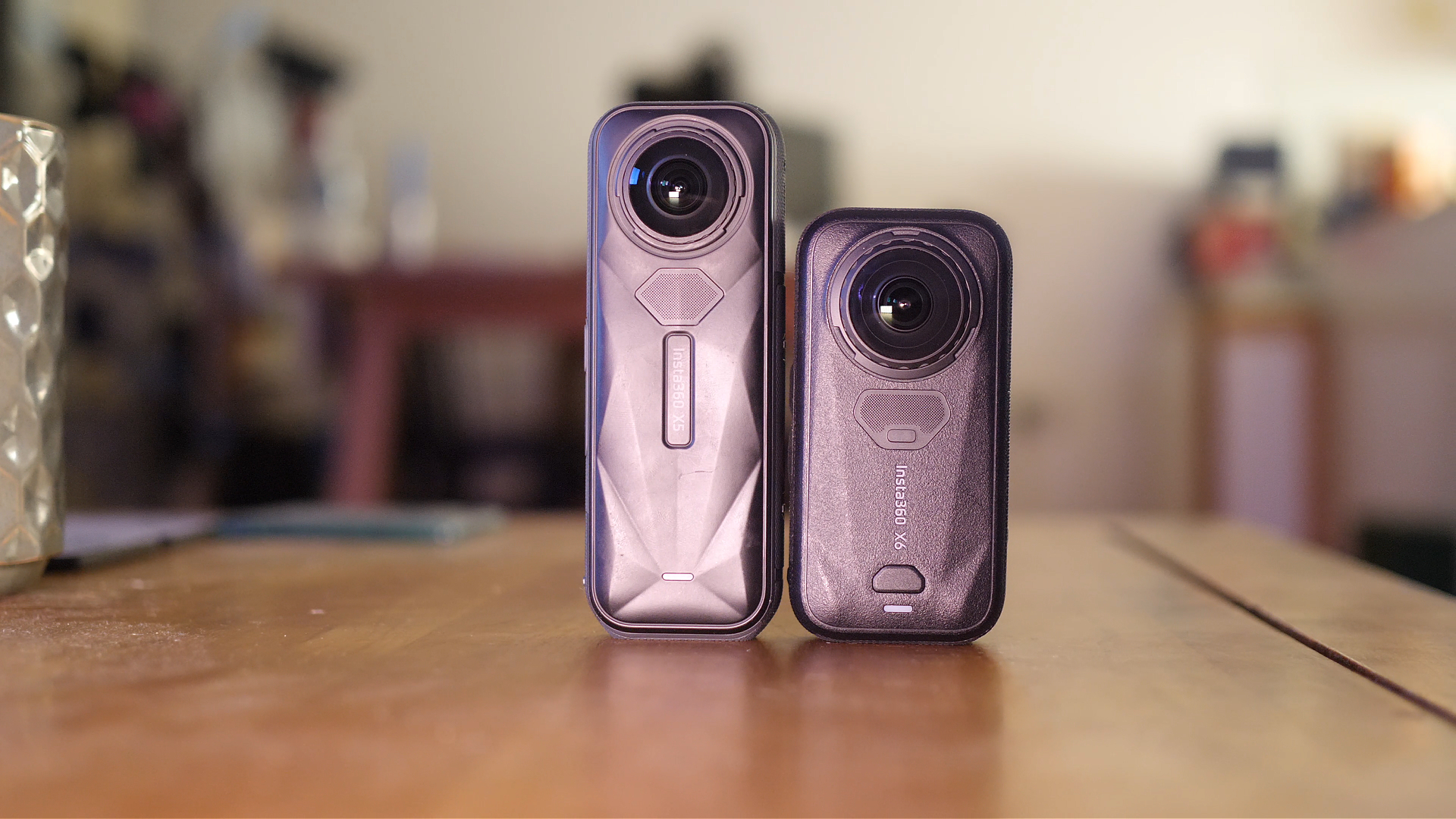
The X6 is shorter and wider than previous X-series cameras. I find the new shape easy to carry and well balanced on a selfie stick, although it may take a little time to adjust if you have used the taller X-series design for years.
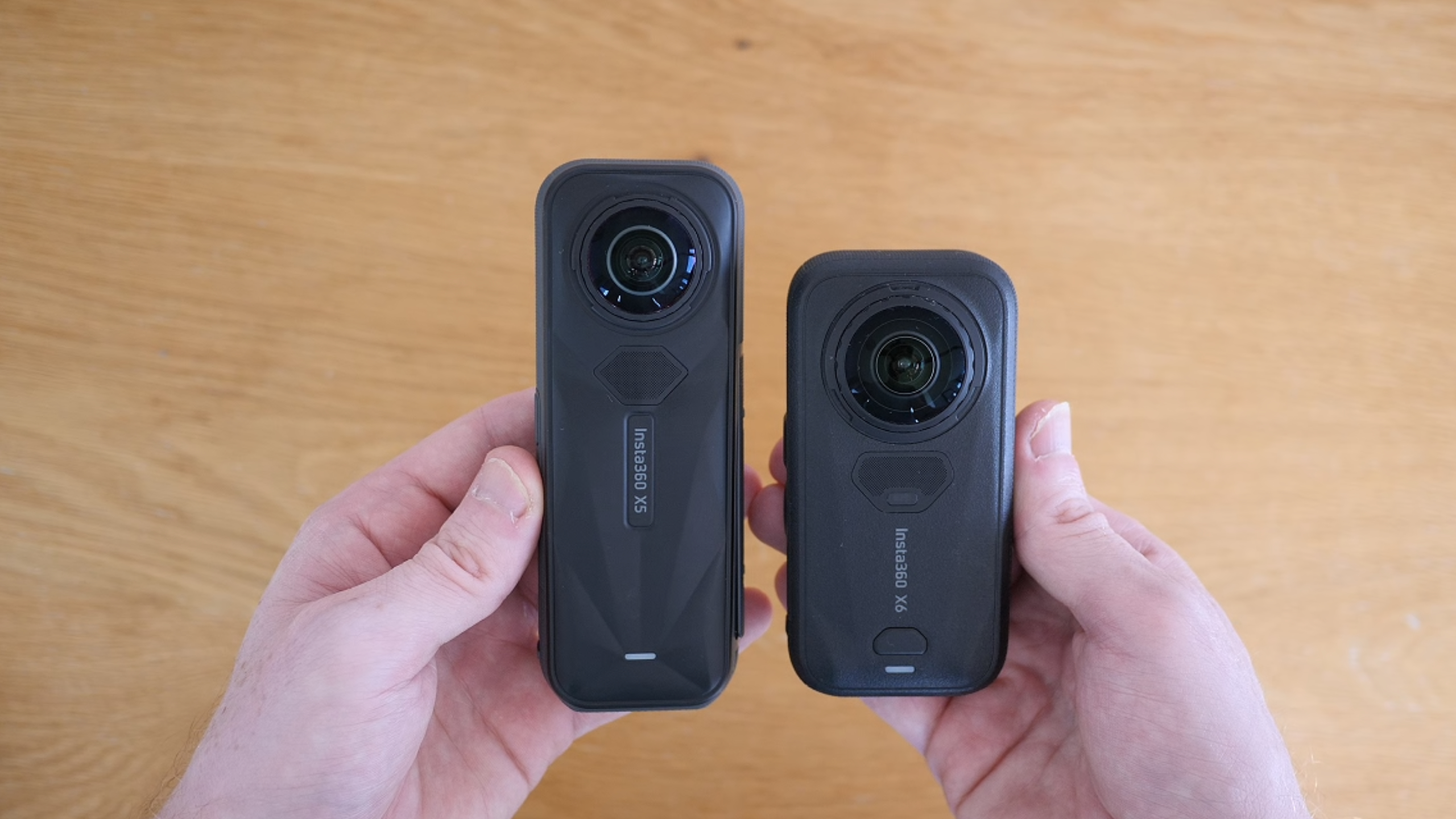
The larger, brighter screen is a genuine improvement. It is easier to see outdoors and gives you more space to move through the menus. The haptic feedback is also stronger and helps compensate for the camera’s greater reliance on touch controls.
However, I do not like the full touchscreen approach or the lack of a conventional physical shutter button. I sometimes struggle to hit the onscreen shutter correctly, especially when I want to start recording quickly. A proper button is easier to find by feel, more reliable when wearing gloves and gives immediate physical confirmation that recording has started.
The cleaner design looks modern, but this feels like a case where appearance has been prioritised over usability. On an action camera, I would always choose a dependable physical shutter control.
Some older accessories will not fit
The redesigned body also means that form fitting accessories made for earlier X-series cameras may not work with the X6. The dive case is the clearest example, but the same issue can apply to cages, frames and other accessories designed around a specific body shape.
Universal selfie sticks and mounts should be less of a problem, but check compatibility before buying. If you already own several camera-specific accessories, replacing them can make the real cost of upgrading significantly higher.
47GB of internal storage is a brilliant safety net
My favourite new hardware addition is the 47GB of usable internal storage.
I have occasionally arrived at a location ready to film and realised that my microSD card is still sitting in my laptop card reader. With most action cameras, that ends the shoot until you find another card. The X6 gives you enough built in storage to keep recording.
It is not a substitute for a large, fast microSD card. High-bitrate 8K 360 footage consumes storage quickly. However, as an emergency backup, it solves a very real problem and could save an otherwise wasted day of filming.
Insta360 X6 video quality
Video quality is the main reason to buy the X6, and I think it is currently the best you can get from a consumer 360 camera overall. See below for various screengrabs from X6 video, or go to my camera comparison tool and see side by side comparisons between the X6 and a range of other cameras.

The X6 uses two larger 1/1.1-inch-type custom made Sony sensors. These are not full one-inch sensors, despite how the fraction can sometimes be misread, but the increase is still enough to produce a visible improvement in difficult conditions. The act they are custom made for this camera is a plus as it means the sensors are specifically calibrated to the lenses and chips.
Daylight footage
In bright daylight, X6 footage looks detailed, stable and more natural than previous generations. Insta360 appears to rely less heavily on artificial sharpening, which gives fine details a less processed appearance.
I can see the improvement most clearly in grass, trees, textured buildings and clouds. The camera retains more information in bright skies, while darker parts of the frame look cleaner. That better balance between highlights and shadows matters in real-world scenes where the two lenses may be facing completely different lighting conditions.
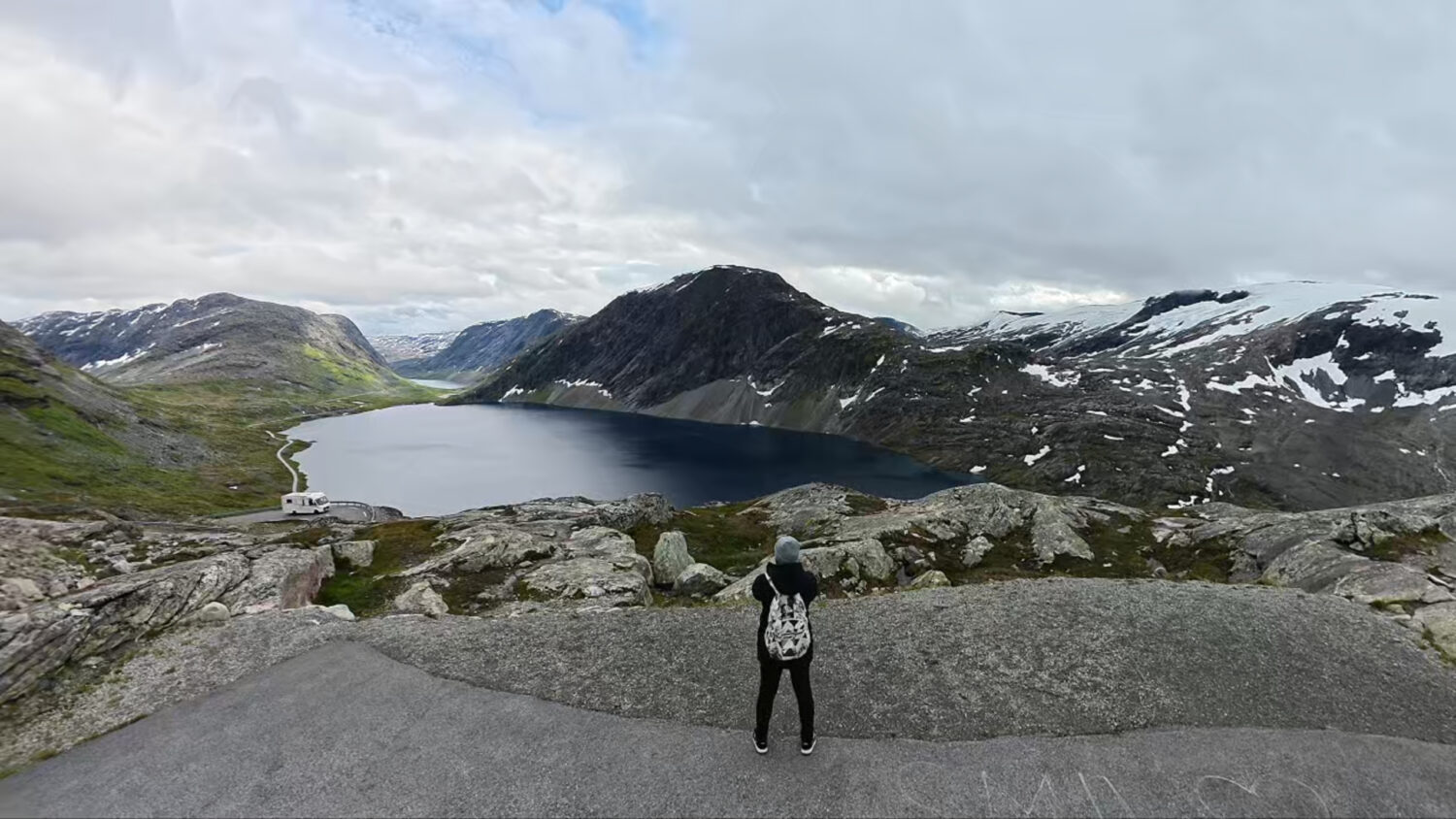
The daylight improvement is noticeable, but it is not transformative. Consumer 360 cameras have already reached a point where adding more processing or slightly larger sensors produces smaller gains in perfect light. The X6 pulls ahead when you inspect fine detail or reframe heavily, but it does not make the previous generation suddenly look poor.
Low-light and dusk footage
The difference becomes much more obvious at dusk and at night. This is where the larger sensors make their strongest difference.
X6 footage contains less noise, retains more colour and preserves a wider range between bright and dark areas. Streetlights and illuminated signs are less likely to lose all detail, while shadows remain cleaner. Scenes shot around sunset also hold on to more information in the sky without turning the foreground into an unusable silhouette.
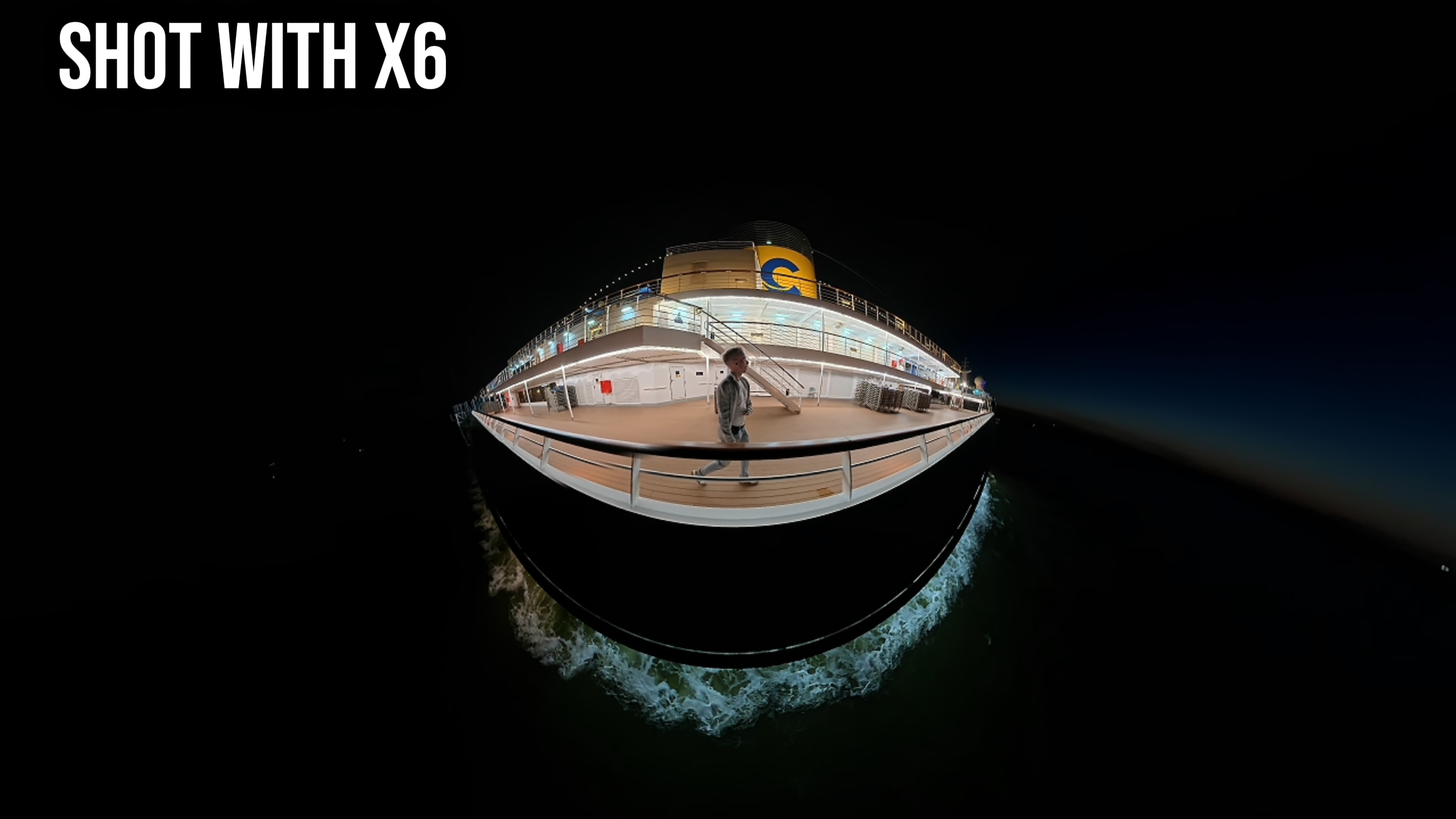
Low light remains difficult for any small 360 camera because each sensor has to capture an extremely wide field of view. The X6 does not perform miracles, but it gives me the cleanest and most flexible footage I have seen in my years of testing these cameras.
If you like to shoot city scenes at night, indoor events, blue hour or sunsets, the improvement will matter much more than it does to someone who only films in bright sunshine.
10-bit colour is a key upgrade
The much anticipated introduction of 10-bit video is more useful than another headline resolution increase. It allows the camera to record far more colour information and produces smoother transitions between similar shades.
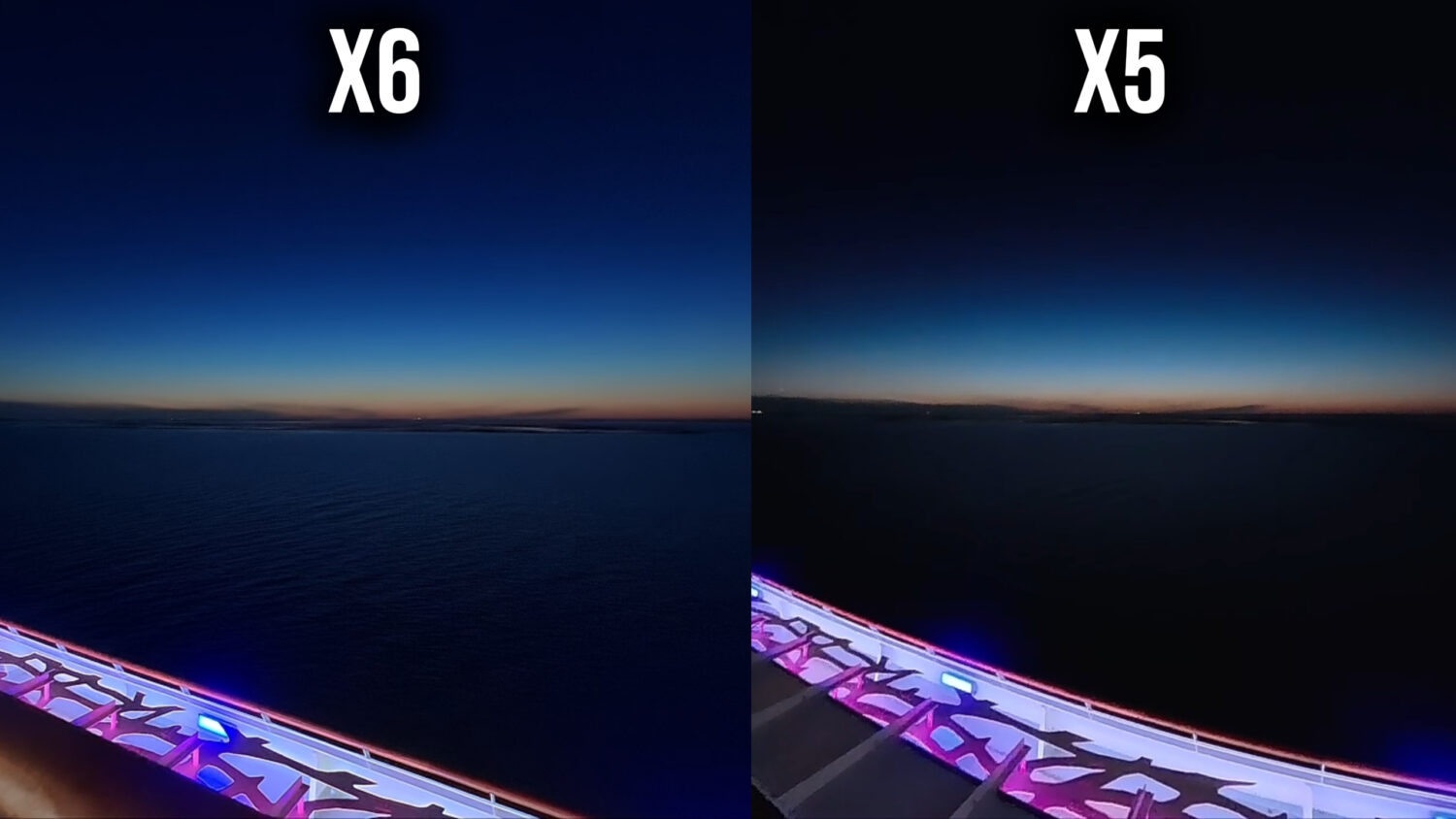
I see the benefit most clearly in skies. Sunsets and dusk footage show far less obvious banding, and subtle changes in colour are preserved more accurately. The files also cope better with colour correction, giving me more freedom to adjust exposure and create a consistent look across footage from multiple cameras.
8K50 is useful – but not revolutionary
The X6 can record 8K 360 video at up to 50fps. The higher frame rate produces smoother movement and gives you more flexibility to slow clips down on a 25fps timeline.
For ordinary walking, travel and static shots, I often do not see a huge improvement over 8K30 after the footage has been reframed and exported. It becomes much more valuable when filming fast movement such as cycling, skiing, running or driving.
Fifty frames per second also fits PAL production more naturally than NTSC. US users can still record in 8K50, but it is less convenient for 30fps and 60fps timelines and may be more vulnerable to flicker under some 60Hz artificial lighting. Why not 60fps? The processing and heat requirements may simply be beyond what this compact body can currently sustain.
Dolby Vision
Dolby Vision is intended to optimise brightness, contrast and colour dynamically for each scene when viewed on compatible hardware.
In practice, I have not yet seen a huge improvement compared with standard footage given some basic colour correction. Support also depends on the device, screen and software used for playback or editing, with the easiest workflow currently limited to compatible parts of the Apple ecosystem and selected displays.
This may become more useful as support expands, but I would not buy the X6 for Dolby Vision alone.
Photo quality
The X6 can capture 360 photos at up to 120MP. Resolution is only one part of image quality, but the resulting photos are noticeably better.
There is more usable detail when I zoom into an image or extract a conventional flat photo from the full 360 frame. The larger sensors also help with dynamic range and lowlight quality, producing cleaner shadows and better controlled highlights.
The improvement follows the same pattern as video. It is easier to see when you inspect the image closely, crop heavily or shoot in difficult light. On a small social media screen, the difference will be less dramatic.
AI Photo Frame
AI Photo Frame analyses a 360 photo, identifies important subjects or features and automatically creates camera movements around them. It makes turning a static 360 image into a short video much quicker.
The detection is more accurate than earlier AI tools, although it does not always choose the part of the photo that I consider most interesting. Like most generative or automated features, it works best as a starting point rather than a replacement for your own judgement.
Single-lens camera mode
The X6 can also operate like a conventional action camera using one lens. It now records at up to 5K60, with a super-wide 5K30 option.
This is useful for chest-mounted cycling and similar situations where you want a very wide field of view and strong stabilisation without reframing a full 360 file. It also makes the X6 more versatile when you only want to carry one camera.
I still would not buy it primarily for single-lens recording. A recent flagship phone will usually produce better conventional travel footage, while a dedicated action camera can be a stronger choice for standard point-of-view video.
The reason to buy an X6 is its ability to record everything around you and decide on the shot afterwards. Single-lens mode is a useful extra rather than the main attraction.
InstaFrame 2.0
InstaFrame records a readyto share flat video while preserving a 360 version that can be reframed later. On the X6, the flat output can reach 4K30 and tracking is more accurate.
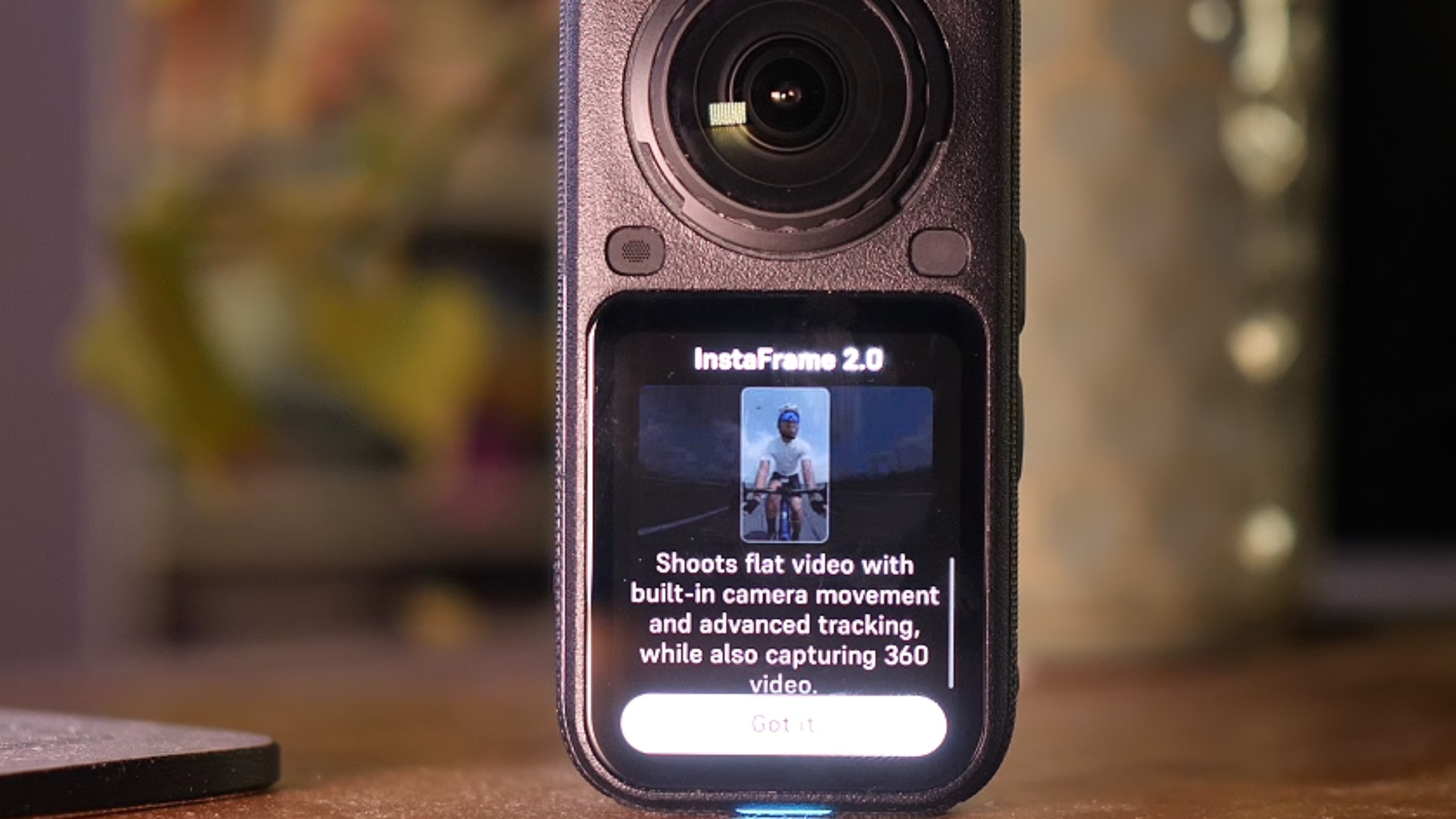
I find this particularly useful for hiking, skiing and vlogging, where the main goal is simply to keep yourself in the shot. When the tracking works well, the result needs almost no editing, but you still retain the original 360 recording if the automatic framing gets something wrong.
This is one of the better examples of Insta360 reducing editing time without removing creative control.
Battery life
The X6 has a 2600mAh battery and the improvement is noticeable in real use. Insta360 claims a maximum runtime of up to 233 minutes under specific low-demand settings, although demanding 8K modes will naturally drain it faster.
My own three-hour timelapse test was more convincing than the official figure. The X5 ran out of power during the recording, while the X6 still had around 30% remaining.
Results will vary depending on resolution, frame rate, screen use, wireless connections and temperature, but this was a substantial practical difference. Better endurance is particularly valuable for 360 cameras because long recordings, timelapses and processor-heavy modes can consume power rapidly.
Waterproofing and replaceable lenses
The X6 is waterproof to 20 metres without a case. That is reassuring for rain, splashes and accidental submersion, but I would still use a compatible Invisible Dive Case for proper underwater 360 footage.
Water refraction causes stitching and distortion problems when exposed dual fisheye lenses are used underwater. The camera may survive at 20 metres, but that does not mean the resulting 360 video will look good without the correct case.
The outer lenses are replaceable, and Insta360 has made the replacement process easier than its first attempt at this system. That is a major ownership benefit because the protruding fisheye lenses on any 360 camera are extremely easy to scratch.
I would still use lens guards in situations where the camera might hit the ground. Replaceable lenses make damage less catastrophic; they do not make the camera indestructible.
Insta360 app, Shot Lab and AI editing
Software is a major part of the X6 experience and one of the main reasons I still think Insta360 has the best overall 360 camera package.
The app includes several new Shot Lab effects that can automatically turn your footage into stylised clips and special-effect shots. Insta360 is also pushing AI harder, with improved subject detection, automatic reframing, AI Director and AI Photo Frame.
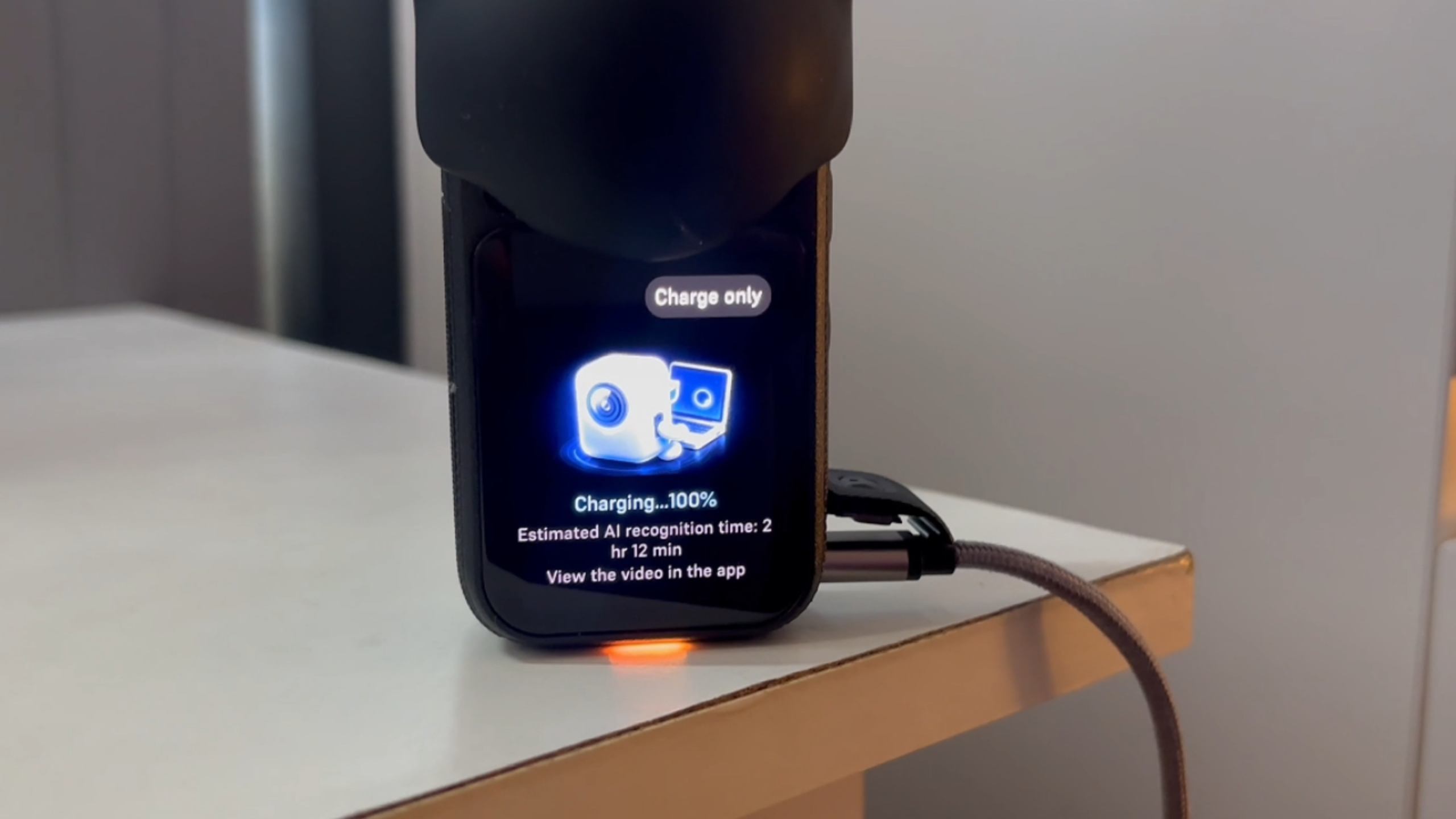
Some of these features are genuinely getting better. AI Director can create a respectable basic vlog edit, subject detection is more reliable and the new automatic effects make it easier for a beginner to produce something impressive without learning every editing control immediately.
However, I remain sceptical of the wider “no editing” message. The biggest creative advantage of a 360 camera is not simply that AI can choose an angle for you. It is that you can create camera movements and perspectives that would be impossible with a conventional camera.
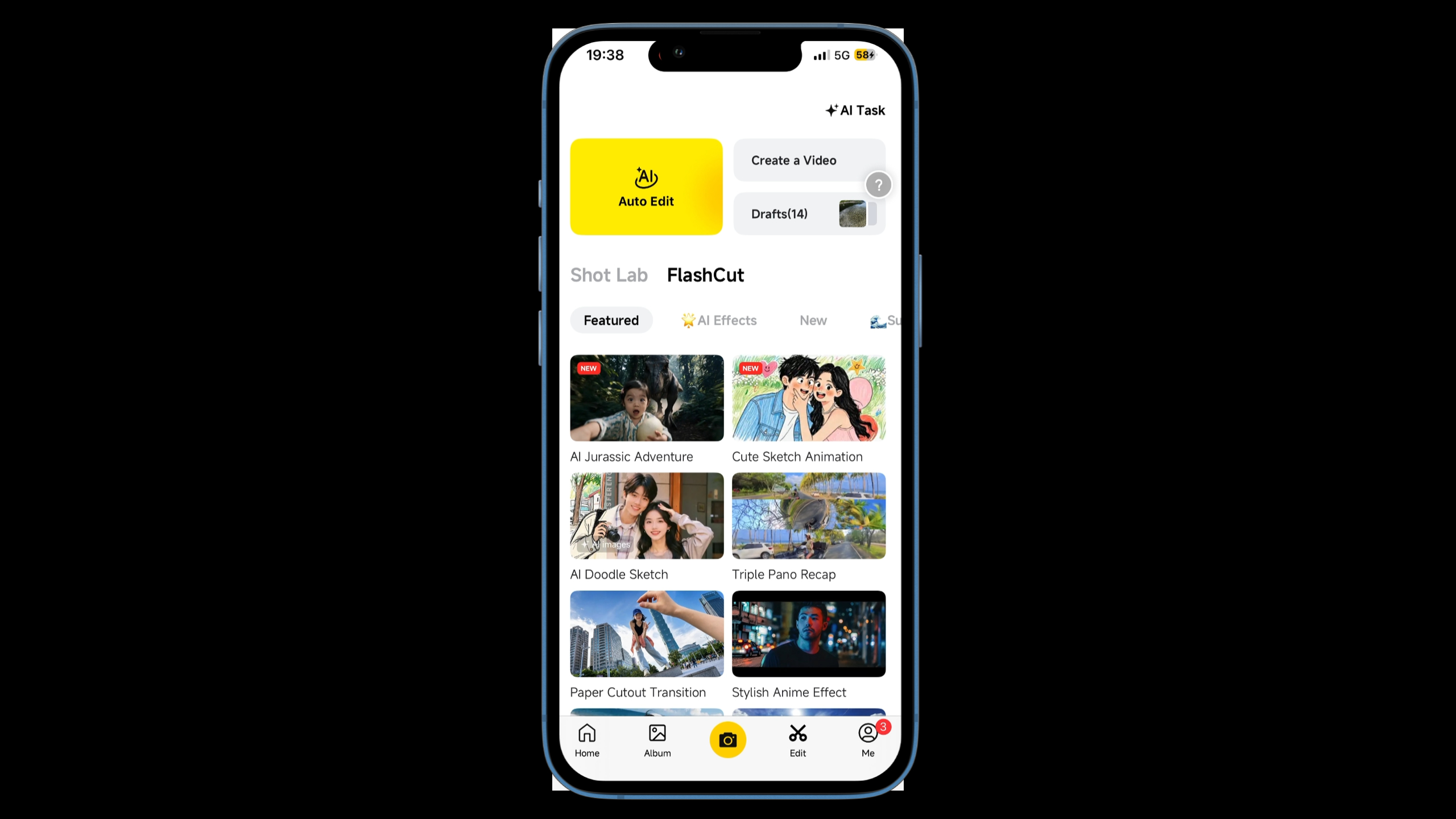
AI does not know which moment matters to your story, when a fast movement should suddenly stop or why an unusual angle might be funnier or more dramatic than the obvious one. It can produce something competent, but it cannot replace the personality and creativity of a carefully reframed edit.
I strongly recommend learning how to add keyframes, change perspective, track subjects and build transitions manually. These skills are what turn 360 footage from a technological novelty into a genuinely distinctive video.
The app still needs a clearer manual editing experience
Despite all the new AI features, the Insta360 app is still more confusing than it should be. There are a lot of modes, effects and editing routes competing for attention, and some basic manual tools can feel buried.
I would like Insta360 to devote as much effort to the core user experience as it does to adding another automated effect. Faster keyframing, clearer navigation, more precise controls and a more logical export process would benefit everyone, including experienced creators who do not want the software to make every decision for them.
AI processing can also be demanding. Some effects make a phone work hard, drain its battery quickly and generate a noticeable amount of heat. The convenience is real, but it is not free.
Are AI and software making the X6 more expensive?
It is easy to judge the price of a camera only by the physical components in the box, but part of what you are buying with the X6 is access to an editing platform that is under constant development.
Building and running AI-powered tools requires significant ongoing investment. The same pattern is appearing across the technology industry: products are becoming more expensive partly because companies are spending heavily on software, machine learning and the infrastructure required to support them.
That does not automatically make the price good value. A buyer who prefers manual editing should not be expected to feel grateful for paying more to fund AI features they rarely use. It does, however, help explain why comparing the X6 with a rival purely by looking at sensor size and frame rates misses part of the picture.
Insta360’s software remains well ahead of the competition. The app supports more automatic effects, provides a better mobile reframing experience and is updated regularly. That continued development has value, even if I would prefer more of it to focus on simplifying manual editing.
I do not think the X6 is overpriced in the sense that it offers poor technology. It combines two large sensors, heavy onboard processing, replaceable lenses, internal storage and the strongest software ecosystem in the category. The problem is that “worth the money” and “affordable” are not the same thing.
The X6 can be good value for the right creator and still be too expensive for the wider consumer market.
How does the X6 compare with other 360 cameras?
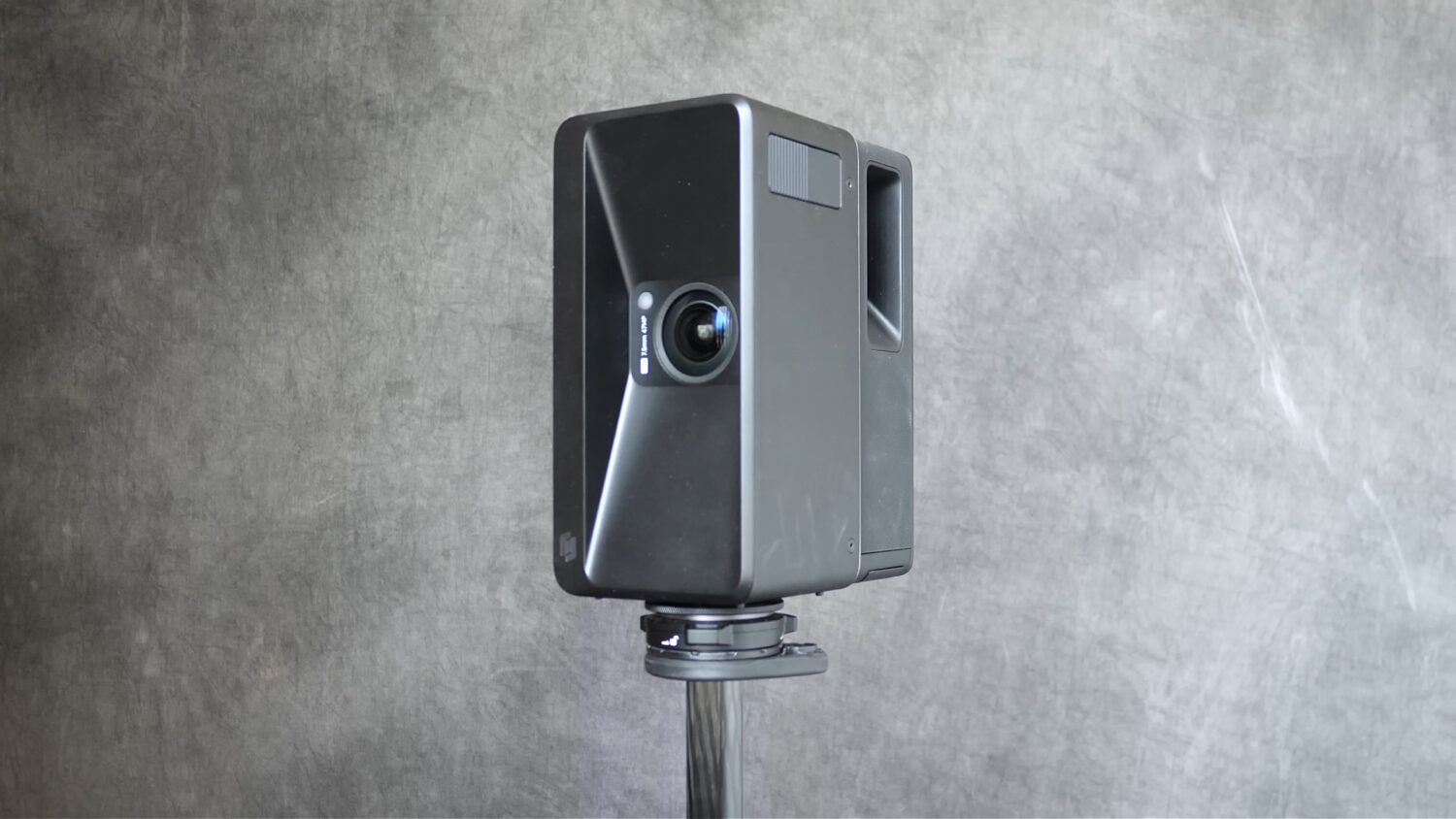
Competition in the consumer 360 camera market is stronger than it used to be, and rival models may beat the X6 in an individual specification, feature or price comparison. The DJI Osmo 360 released last year has many of the headline features of the X6.
However, no competitor currently offers a better complete package in my experience. The X6 combines excellent image quality, dependable stabilisation, mature reframing tools, a wide accessory system, replaceable lenses and the most developed mobile app.
That combination matters more than winning every row in a specifications table. A 360 camera creates a workflow as much as it creates a video file. Recording is only the first step; the footage then needs to be tracked, reframed, edited and exported. Insta360 remains the company that handles that full journey best.
This is why I consider the X6 the best consumer 360 camera overall, even though the price may lead some buyers towards a cheaper rival.
Could the Insta360 X6 last for several years?
Annual camera releases encourage people to focus on what might arrive next, but we may be approaching a point of diminishing returns in compact 360 camera hardware.
Recording two full 360 degree views at 8K50 while managing heat, battery life, stitching and stabilisation inside a pocket-sized body is already extremely demanding. Larger sensors would require more space, more power and larger lenses. Higher frame rates and resolutions create additional heat and enormous files.
There will still be improvements, particularly in processing, low light and computational imaging, but I would not expect every new generation to transform daylight image quality. Software may become a larger part of future progress than the physical camera.
That makes the X6 easier to view as a long-term purchase. It already records high-quality 8K footage, supports 10-bit colour, offers replaceable lenses and has enough battery life for demanding shoots. If Insta360 continues improving the software, I can see this camera remaining highly capable for several years.
Ironically, the high price is easier to accept if you stop thinking of the X6 as something that needs replacing next year.
Insta360 X6 review: final verdict
The Insta360 X6 is the best consumer 360 camera ever made. Its video quality is the strongest overall in the category, particularly at dusk and at night, and 10-bit colour is a meaningful addition for anyone who edits their footage seriously.
The other improvements make it a much better camera to live with. Battery life is noticeably longer, 47GB of internal storage can rescue a shoot when you forget a microSD card, the screen is larger and brighter, and replacing a damaged lens is easier.
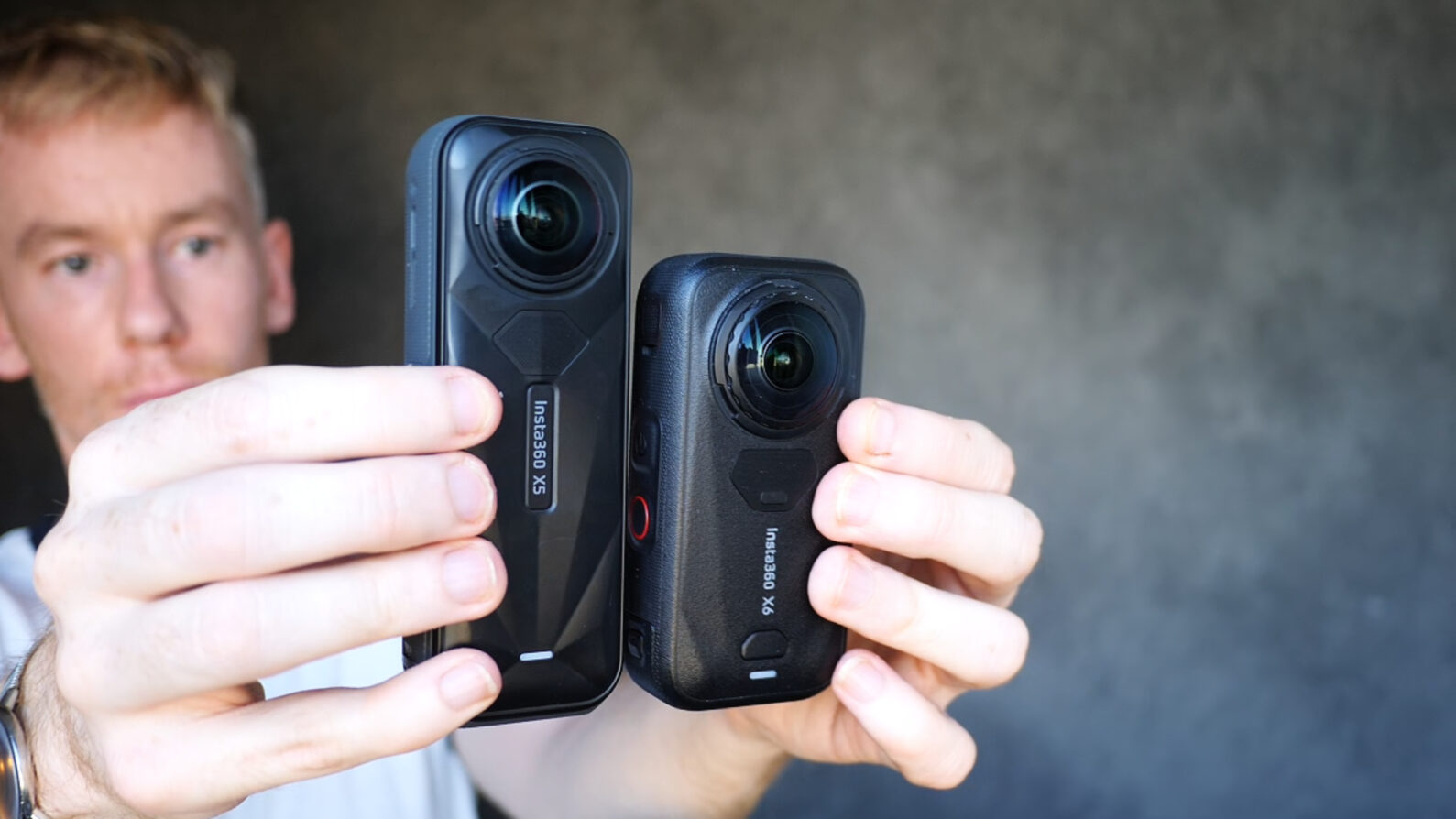
It is not perfect. I miss the physical shutter button, the reduced timelapse resolution is difficult to understand and the app remains unnecessarily confusing when editing manually. Insta360’s AI features are improving, but they cannot replace the creativity that comes from learning to reframe 360 footage yourself.
The price is the biggest issue. This is a substantial amount of money for a camera that many people will treat as a secondary device. Part of that cost supports a software platform that remains far ahead of the competition and continues to evolve, but that does not change the fact that the X6 is a big ask.
Ultimately, the X6 earns its position at the top because it offers the best combination of hardware and software – not because every new feature is essential. If you can afford it and will genuinely use the creative freedom of 360 video, it is the model I recommend.
We may also be reaching the point where major annual hardware advances become harder to achieve. For buyers, that could be good news. The X6 is capable enough that you should not need to replace it for a long time.
Where to Buy
You can get the X6 from the official Insta360 website which delivers worldwide. Using this link you’ll also get a free lens replacement kit.
Frequently asked questions
Is the Insta360 X6 the best consumer 360 camera?
Yes, I think the Insta360 X6 is the best consumer 360 camera overall. Some rivals may compete closely on individual specifications or price, but the X6 offers the strongest combination of image quality, stabilisation, mobile editing, automatic effects and manual reframing tools.
Is the Insta360 X6 worth the price?
It is worth the price for enthusiasts and creators who will regularly use its low-light performance, 10-bit colour, 8K50 recording and advanced editing ecosystem. It is harder to justify for casual users who only want occasional 360 clips, particularly once the cost of accessories is included.
How good is the Insta360 X6 in low light?
The X6 produces the best low-light results I have seen from a consumer 360 camera. Its larger sensors capture cleaner shadows, more colour and improved dynamic range. It still cannot match a large-sensor conventional camera, but the improvement is clearly visible at dusk and at night.
Does the Insta360 X6 record 10-bit video?
Yes. The X6 supports 10-bit video, which produces smoother colour gradients and gives you more flexibility when colour grading. The difference is especially visible in sunsets, dusk skies and other scenes where 8-bit footage can show banding.
Does the Insta360 X6 shoot 8K60?
No. Its maximum 360 video setting at 8K is 50fps. This works particularly well with 25fps PAL timelines and fast action, but an 8K60 mode would have been more convenient for users working in 30fps or 60fps.
Does the Insta360 X6 have internal storage?
Yes. It includes 47GB of usable internal storage. I would still use a fast microSD card for normal recording, but the built-in capacity is extremely useful if you forget a card or fill it unexpectedly.
Can the Insta360 X6 be used underwater without a case?
The X6 is waterproof to 20 metres without a case. However, I still recommend a compatible Invisible Dive Case for good 360 video because water refraction around the uncovered fisheye lenses can cause distortion and stitching problems.
Can AI edit Insta360 X6 footage automatically?
Yes. AI Director, Shot Lab effects, subject tracking and other app tools can automatically create basic edits. The results are improving, but manual reframing still gives you more control and usually produces more creative footage.
Will the Insta360 X6 remain useful for several years?
It should. The combination of 8K50 recording, 10-bit colour, strong low-light performance, replaceable lenses and mature software gives the X6 plenty of longevity. With compact 360-camera hardware approaching diminishing returns, future annual upgrades may be less dramatic than they were in earlier generations.


Owner of threesixtycameras.com. Writer, photographer and videographer. You can see my YouTube channel for guides of how to shoot 360 video. I've written for The Times, Digital Photography School and Sunday Express.



[…] may change when the X6 arrives. Maybe that’s coming sooner than we think. But until then, I’m still using the X5, still making […]