Ricoh Theta X vs Ricoh Theta Z1: Ultimate Comparison

There are now two high end all-in-one Ricoh 360 cameras priced roughly the same, so which one should you get? Both the Ricoh Theta X and Ricoh Theta Z1 are excellent cameras but they are designed with slightly different purposes in mind. One is more simple to use but lacks a certain image quality whereas the other can take beautiful shots with a more extensive workflow.
There are actually many differences between these two cameras, but by the end of this post you should have a clear idea which is best for you.
Ricoh Theta X vs Ricoh Theta Z1
Theta X vs Z1: The Specs
[wpsm_comparison_table id=”81″ class=””]
Photo Quality
Theta Z1
Both of these cameras are primarily designed for photography. This is unique among consumer 360 cameras, most of which are heavily focussed on video. Great quality 360 photos should be high resolution to maintain sharpness and details, avoid over exposure in bright areas and have great dynamic range.
The Z1 (review here) has a distinct advantage thanks to its dual 1 inch sensors. The larger the sensor in a lens the more light it can take in and, generally, the better quality image can be produced. The Z1 is the only 360 camera out right now with such large sensors.
THETA Z1 ISO:200 Shutter speed:1/8 F value:2.1 – Spherical Image – RICOH THETA
I’ve been using the Z1 for a few years and can confirm that the larger sensors do make a difference. I’ve been able to shoot astrophotography with the Z1 as well as very attractive indoor shots that have excellent colour and dynamic range.
The Z1 also has the ability to shoot in the DNG RAW format. This is generally the best format to shoot photos in to get the highest quality; you do have to edit your images in a program like Lightroom which extends the workflow considerably.
Another useful feature unique to the Z1 is a variable aperture which gives the camera greater ability to shoot in low light conditions, even at night with very little light.
The one thing letting the Z1 down is the fairly low 23MP resolution. 360 images should ideally have a very high resolution because the pixels are spread out so much. When zooming in on photos shot with the Z1 you’ll notice a lack of detail.
Theta X
The Ricoh Theta X also has some impressive looking specs that make it a great option for 360 photos. The obvious difference is the boost in resolution up to 60MP, this makes the image shot with the Theta X very sharp and detailed, more-so than the Z1.
Theta X Car Shot
RICOH THETA X – Spherical Image – RICOH THETA
Theta Z1 Car Shot
THETA Z1 EV:0.0 HDR – Spherical Image – RICOH THETA
On the other hand the sensors are half the size in this camera which makes it less capable in more difficult lighting conditions. The sensors are larger than in most other 360 cameras however. The X also lacks the capability to shoot in the RAW format and resulting photos are therefore les dynamic than those shot with the Z1.
Both cameras can shoot in an auto HDR mode which improves the appearance of your photos without any extra editing.
Depending on what you are going to use your camera for, either of these could be a good choice. When it comes to images you need to because between sharpness and a quick workflow with the Theta X or better dynamic range with the Z1.
Photo Comparisons
Let’s take a look at some direct comparisons between 360 photos shot with the Theta Z1 and Theta X. In the first batch we will be looking at photos shot with the Theta Z1 in RAW mode, which allows for the highest quality possible but a longer workflow. The Theta X images are shot using the cameras auto HDR mode.

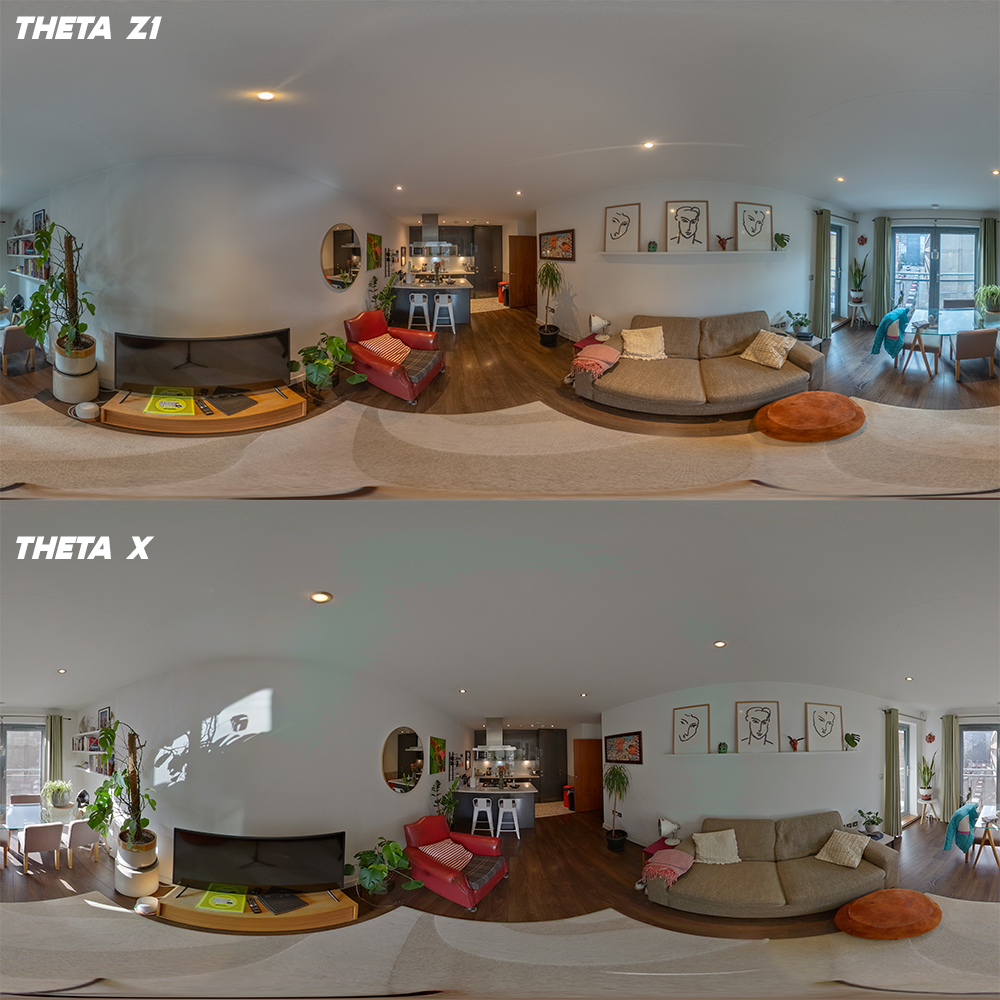
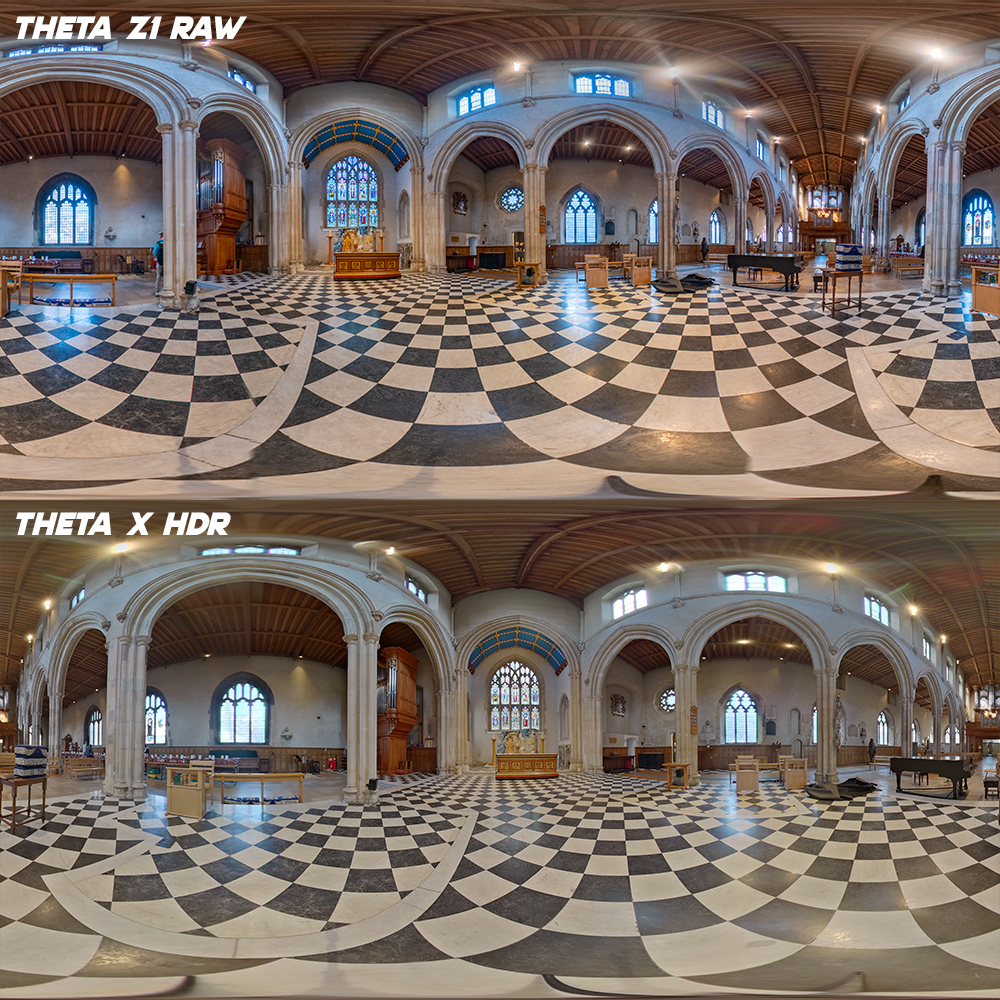

The Theta Z1 seems to be able to capture overall better quality images when using RAW mode compared to the Theta X. Remember that the Theta X images are straight out of the camera where as the Theta Z1 images required significant editing.
While the RAW mode allows for better dynamic range and colours the Theta X does have a resolution nearly double that of the Theta Z1. The higher resolution allows you to zoom into the image without losing as much quality.
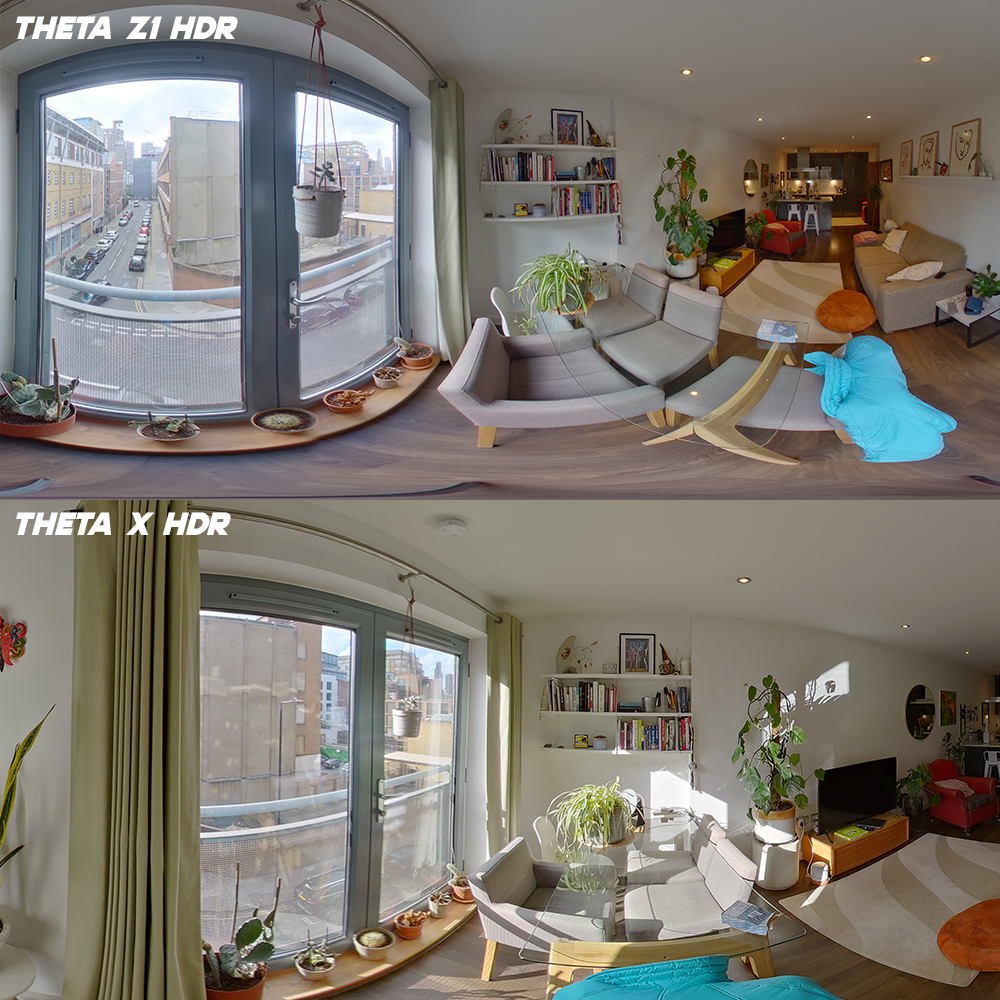
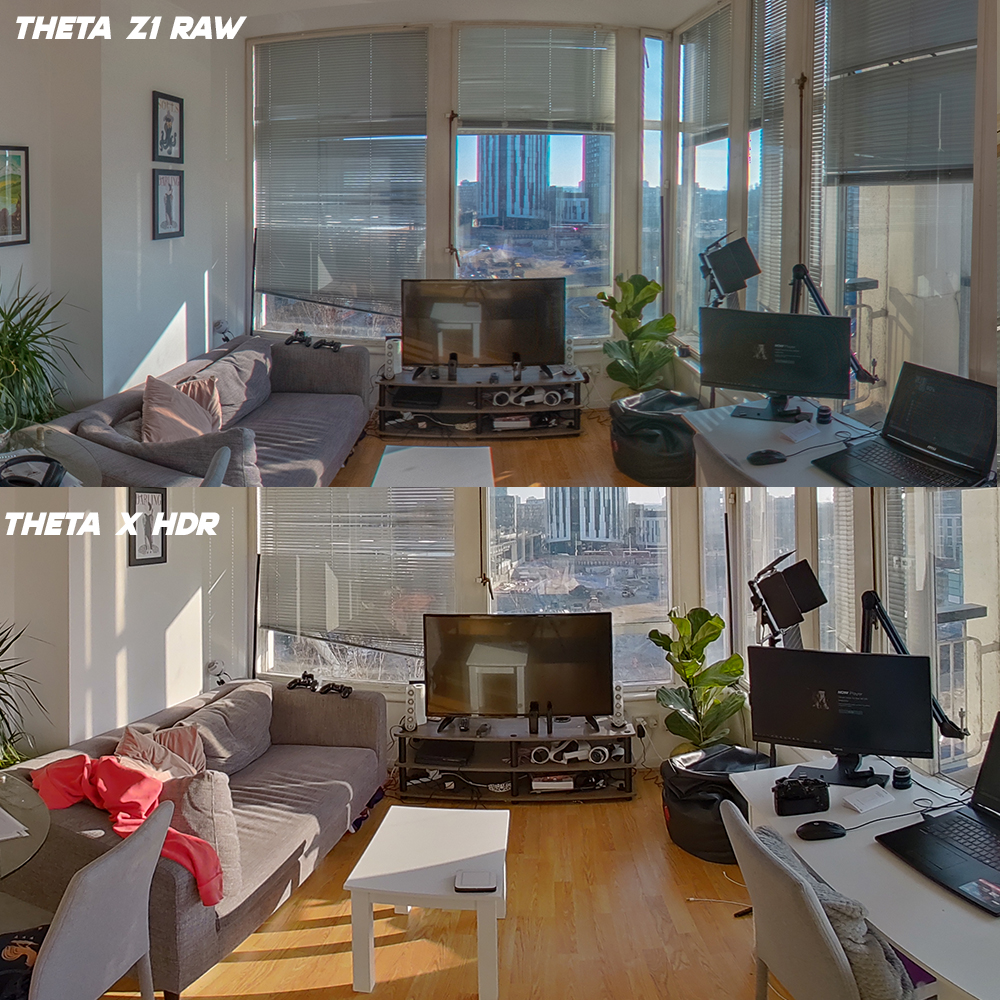
So while the Z1 may produce better looking images the Theta X allows you to capture more detail. In some industries the attractiveness of a photo isn’t so important but capturing as much detail without losing quality is, for example the construction industry.
When comparing the Auto HDR images from the Z1 with the Theta X they seem to be of similar quality however the Theta X images are sharper thanks to the much higher resolution.

Video
While neither of the Theta cameras are particularly designed with shooting video in mind, there is a clear difference between them. The Theta Z1, even with the larger sensors, is unable to match the quality of its video with its photos. Limited to 4K, the resolution of the Z1 video is disappointing and there’s little in the way of stabilization or shooting modes. I wouldn’t recommend using this camera for any serious video work.
The Theta X offers some video upgrades including a boost in resolution up to 5.7K; this brings it in line with other sub 1K 360 camera like the GoPro Max and Insta360 One X2. There are more expensive professional cameras such as the Insta360 Pro 2 which can shoot 8K footage, more suitable for professional VR work.
You’ll also find the Theta X has better stabilization than the Z1, allowing you to shoot 360 video while moving. Although overall the video capabilities of the Theta X outclass the Z1 it’s not professional class.
Design
This is where the differences between the Z1 and X become most apparent. Ricoh has added several useful features to the design of the new X that users of the Z1 long complained about, so to their credit, Ricoh have listened to their audience.


The addition of both removable batteries and a microSD card slot to the Theta X remove limits to how long it can be used for; an issue which plagues the Z1 with it’s internal only memory and integrated battery. To be fair the Z1 has recently been upgraded to have 51GB internal memory, enough for a lot of photos and videos.

The Theta X has 43GB of internal memory and up to 265GB microSD card slot which could last dozens of shoots before it gets full.
Another welcome addition to the Theta X is a 2 inch touch screen, the first in any Ricoh Theta camera. This screen allows you to fully control the camera without connecting to a phone app. You can also preview images and video both before and after shooting. You can also register your favourite shots so that only they will be transferred to your phone or tablet when ready.
This is far more user friendly than the small LCD screen found on the Z1 which can only display limited information.
Which Is Best for Virtual Tours?
I’m fairly confident that most people reading this comparison want to know the answer to this question. Theta Z1 became the most popular camera for shooting virtual tours over the past few years, so should you switch up to the Theta X?
The Question is whether 1 inch sensors + 24 Megapixel is better or worse than 1/2 inch sensors + 60 Megapixel images.
I would argue that when shot using RAW + HDR mode and edited in Lightroom, images shot with the Theta Z1 look better. The 1 Inch lenses and RAW mode allow for excellent dynamic range and far more editing options. However when zooming into images shot with the Z1 you lose quality quickly and the workflow for this method is long and slow.
Images shot with the Theta X using the Auto HDR mode at the max 11K resolution can still look great, if a bit more bland. You can also retain more details when zooming in. This can be important depending on the reason why you are creating a virtual tour. The workflow for this is also very quick as you don’t need any editing.
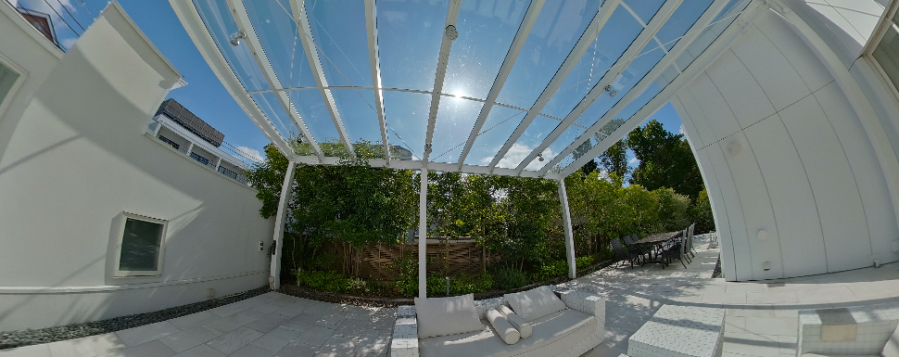
You should ask yourself if you want to spend 5X longer for a single image for around 20% extra quality. In some cases the extra effort would be worth it, for example when shooting astrophotography or for artistic pieces.
Here’s a comparison between images shot with the Theta Z1 in both RAW and HDR mode and the Theta X shot in HDR mode. Check the image title to see which one is which.
For virtual tours in construction sites or smaller real estate jobs I would argue that the much faster and easier workflow, plus the ability to retain more details (important in both of these industries) is worth a loss of dynamic range. Also consider other time saving features such as the screen, removable battery and microSD card.
The Theta Z1 is an easy choice if you want the best quality in terms of visual appeal, which I admit for many is still more important. It may be the case that the Theta X is updated via software to include a RAW mode in the future, in which case it would become by far the better option.
Other Features
Audio: The Theta Z1 features 4 microphones and can record impressive sounding audio, including surround sounds ambisonic audio. The Theta X only features a single microphone so won’t be able to record audio as well as the Z1
Livestream: Both Theta cameras can livestream video at 4K resolution
Plugins: One of the more interesting features of all Theta Cameras is the plugin store which allows you to download extra functionalities for your cameras. These are made by both Ricoh or enthusiasts. Both cameras are able to use these plugins however given the new features of the Theta X you’ll probably find new plugins just for this camera in the future.
Summary
It seems like Ricoh developed the Theta X not as a replacement to the Z1, but as an alternative for people who want a cheaper option with a faster workflow and more user friendly design. People working in industries that want to use 360 cameras and virtual tours may not have the skills required (or the time to develop them) to use the Theta Z1 to its full advantage, whereas the Theta X makes it easy with a quick turn around.
Those people who are interested in the more creative and artistic aspects of photography would likely prefer the Theta Z1, indeed it’s still a great product years after being released and does produce better looking images when edited in RAW mode.
For me the improved design makes the Theta X an easy upgrade. While the images it shoots aren’t better in every way, they are still pretty good. This, coupled with all the other changes, makes it a worthy companion, if not full successor, to the Z1.


Owner of threesixtycameras.com. Writer, photographer and videographer. You can see my YouTube channel for guides of how to shoot 360 video. I've written for The Times, Digital Photography School and Sunday Express.