 The 360 Guy
The battle between the GoPro Max 2 and Insta360 X5 is one that 360 camera fans have been waiting for. Both cameras shoot in 8K, both promise stunning stabilisation, and both come from brands that have dominated the action-cam space for years. But which one is actually worth your money in 2025?
I’ve shot extensive side-by-side tests in daylight and low light, compared editing software, tested photo and video modes, and pushed both cameras in real-world situations. Here’s what I found.
GoPro Max 2 vs Insta360 X5: Specs Comparison
Both cameras record 8K 360° video, but they do it differently. The GoPro Max 2 shoots “true 8K” without upscaling or pixel overlap. This means all 8K pixels appear in the visible frame. The Insta360 X5 also records at 8K (up to 30fps), but some of those pixels are interpolated, so the real-world sharpness difference isn’t huge.
| Feature | GoPro Max 2 | Insta360 X5 |
|---|---|---|
| Max 360 Video | 8K (true, no upscaling) | 8K (upsampled) |
| High-Speed Video | 5.6K 60fps / 4K 100fps | 5.7K 60fps / 4K 120fps |
| Single-Lens Mode | 4K 60fps | 4K 60fps (up to 120fps Bullet Time) |
| Photo Resolution | 29MP | 72MP (HDR + RAW) |
| Colour Depth | 10-bit GP-Log | 8-bit (no log) |
| Sensor Size | 1/1.23″ | 1/1.28″ |
| Lens Replacement | Twist-and-go, tool-free | Replaceable with kit |
| Water Resistance | Up to 10m | Up to 10m (dive case available) |
| Weight | ~190g | ~200g |


You can see the difference between the top 3 360 cameras in terms of resolution and how they calculate 8K in the image below, which shows the RAW unstitched fisheye files.
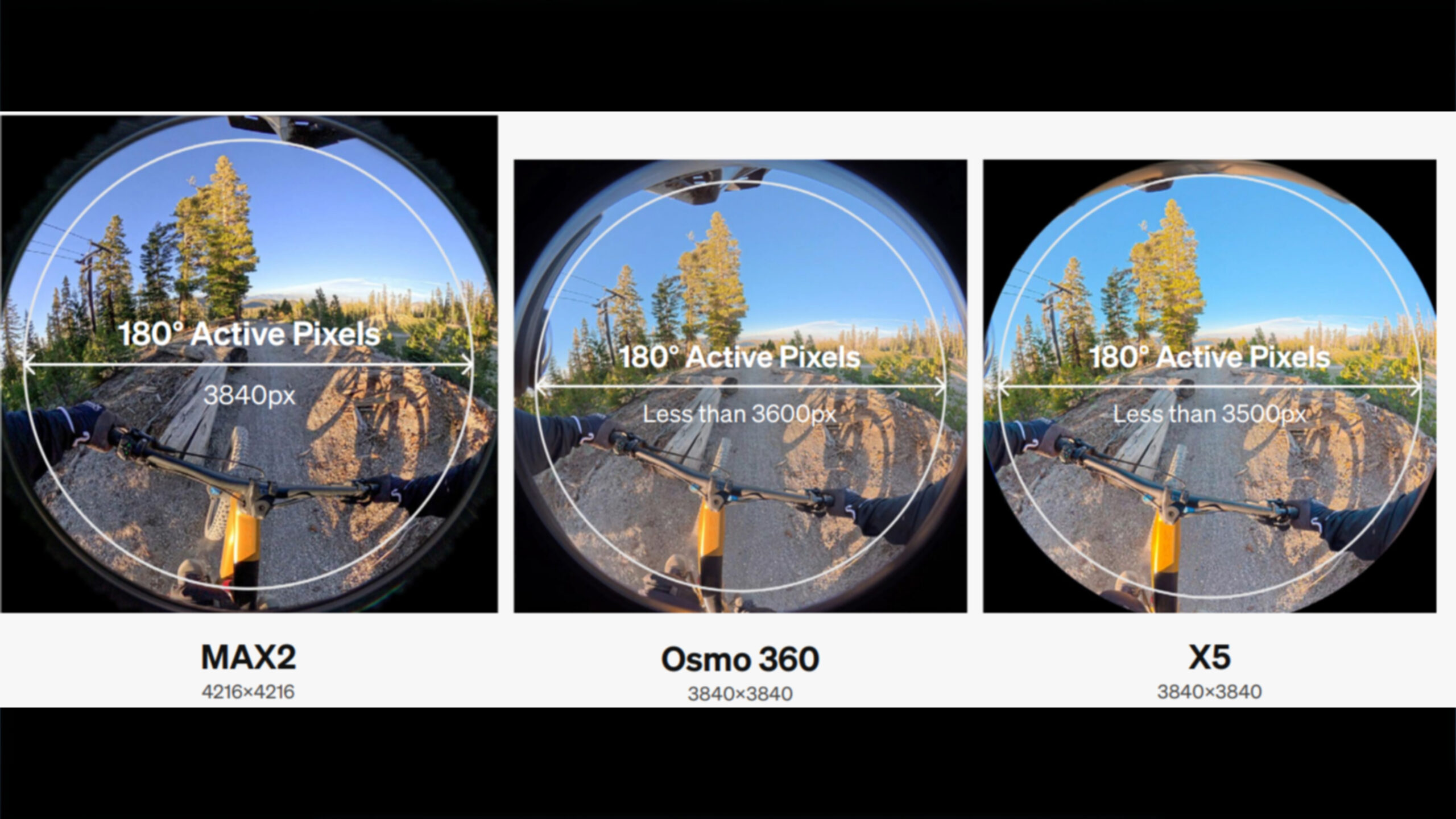
Right away, the GoPro looks like the more refined action camera, while the X5 leans towards creators who want more flexibility in editing and photography.
How I Tested
I shot with both cameras side by side in bright daylight, city nightlife, and mixed indoor environments. Most tests were handheld or on an invisible selfie stick — the way most users would shoot.
I also compared:
- Stabilisation while walking and cycling
- Low-light noise in city scenes
- Ease of editing on mobile and desktop
- Lens durability and usability during real-world use
- Both were tested at their maximum quality settings and exported using their respective desktop apps.
Video Quality
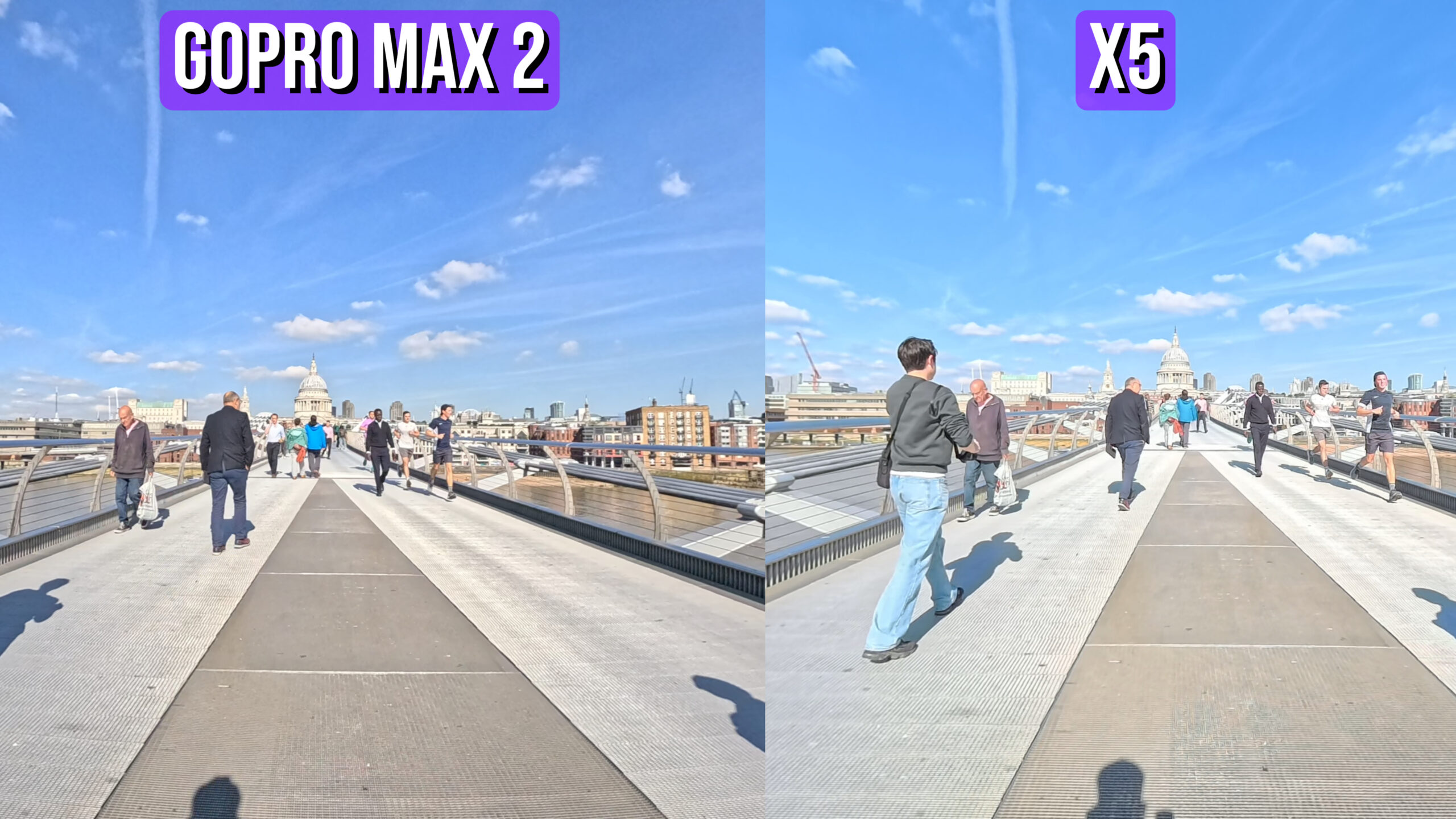
In daylight, both cameras produce excellent results, sharp, colourful, and extremely stable. However, there are subtle but noticeable differences.

The GoPro Max 2 produces the most realistic colour science of the two. It’s vibrant without being over-saturated, and closely matches what I saw in real life. The “true 8K” advantage is technically impressive, but in practice it’s only marginally sharper than the X5 once stitched.
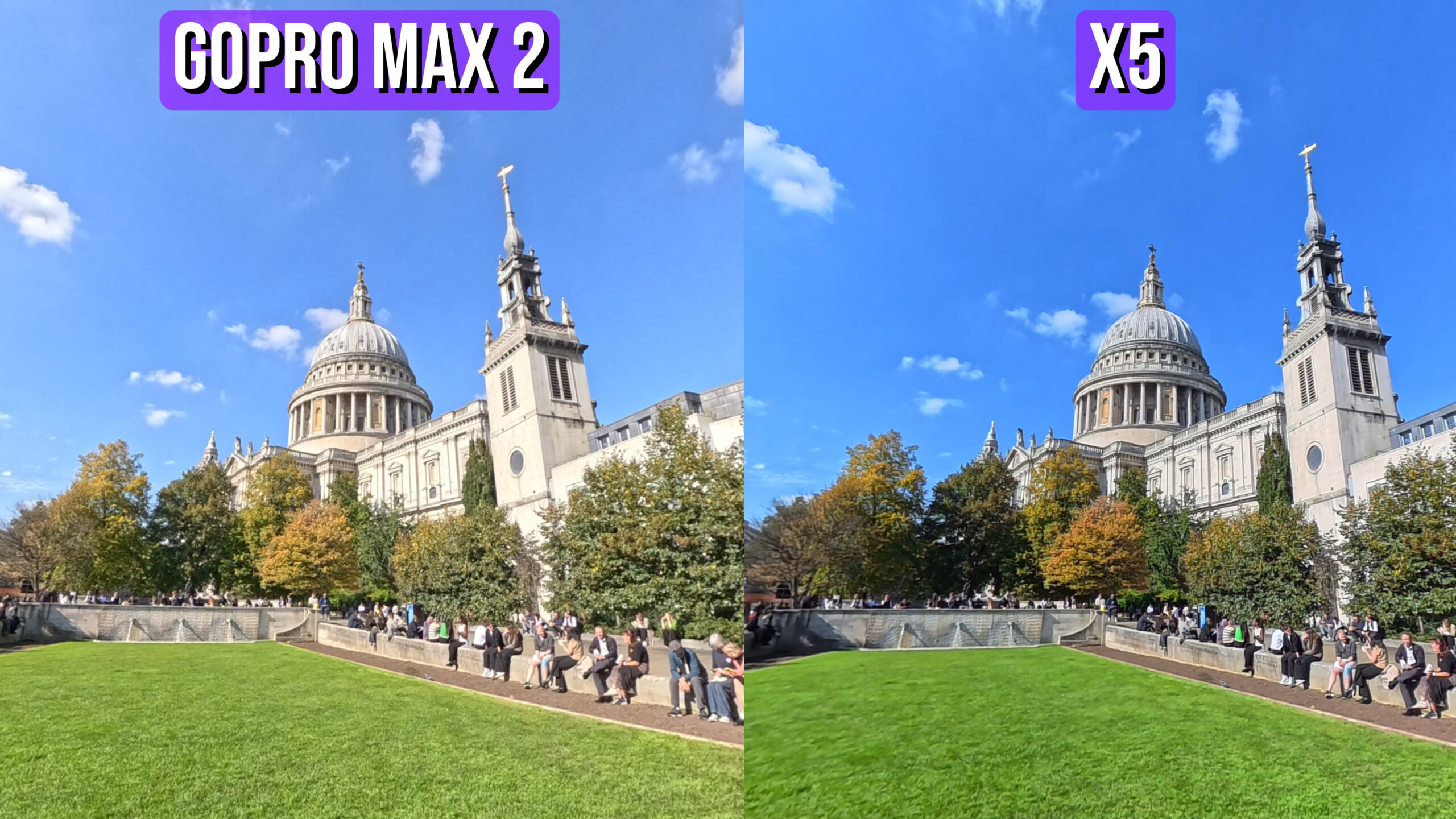
The Insta360 X5, despite lacking 10-bit video, still looks great. Dynamic range is solid, highlights are well controlled, and the overall look is cinematic straight out of camera. You’ll notice slightly less detail in fine textures, but it holds up well.
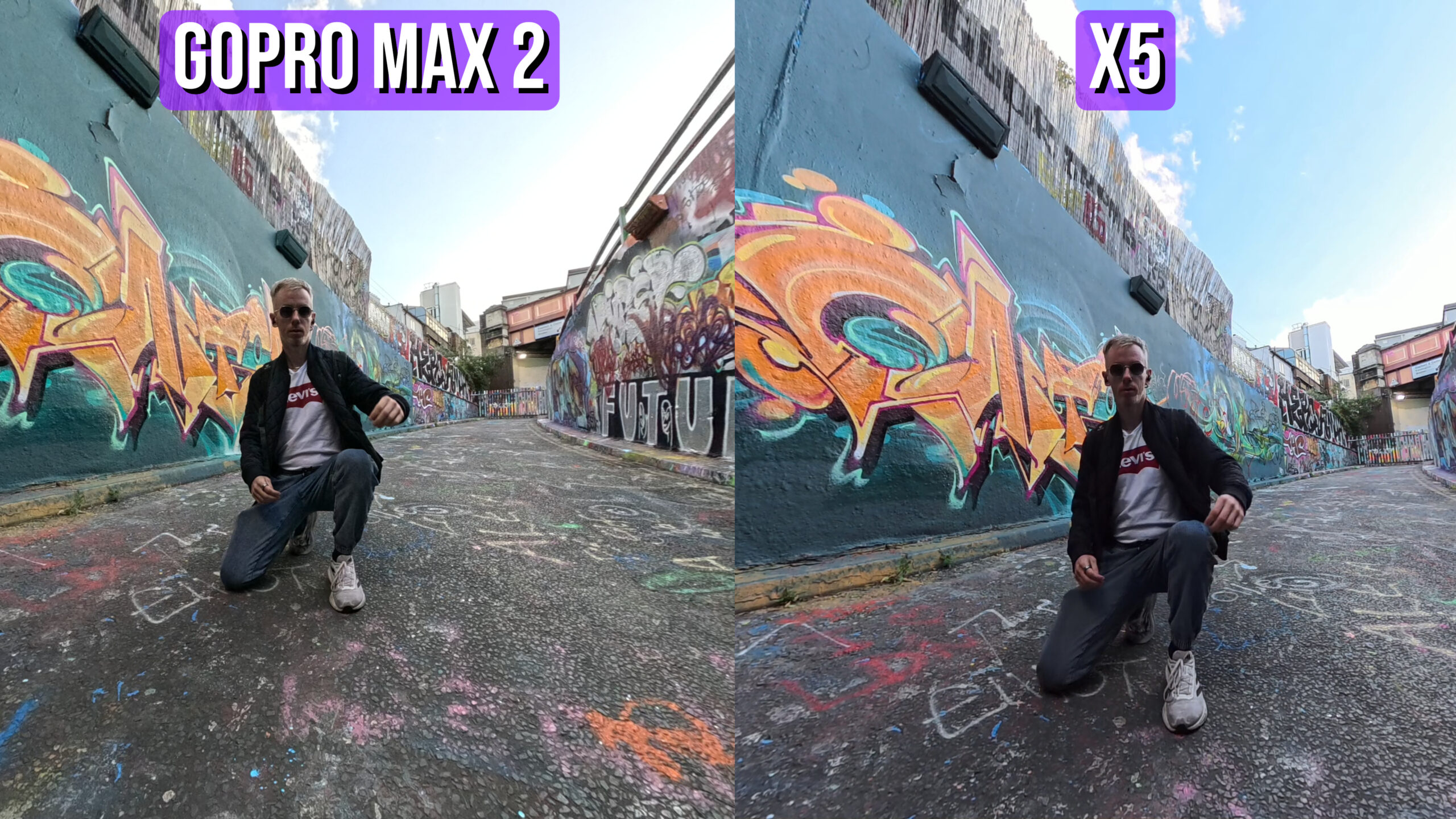
When it comes to stabilisation, both are superb. Whether attached to a bike, chest mount, or handheld, both produce horizon-locked, gimbal-smooth footage. The GoPro feels slightly more responsive during quick pans, but it’s a tight race.
Low Light & Night Shots
This is where things change dramatically.
The GoPro Max 2’s smaller sensors struggle once the sun goes down. Even in well-lit city environments, noise levels rise quickly and the image softens. It’s usable for nightlife or light trails, but not much beyond that.
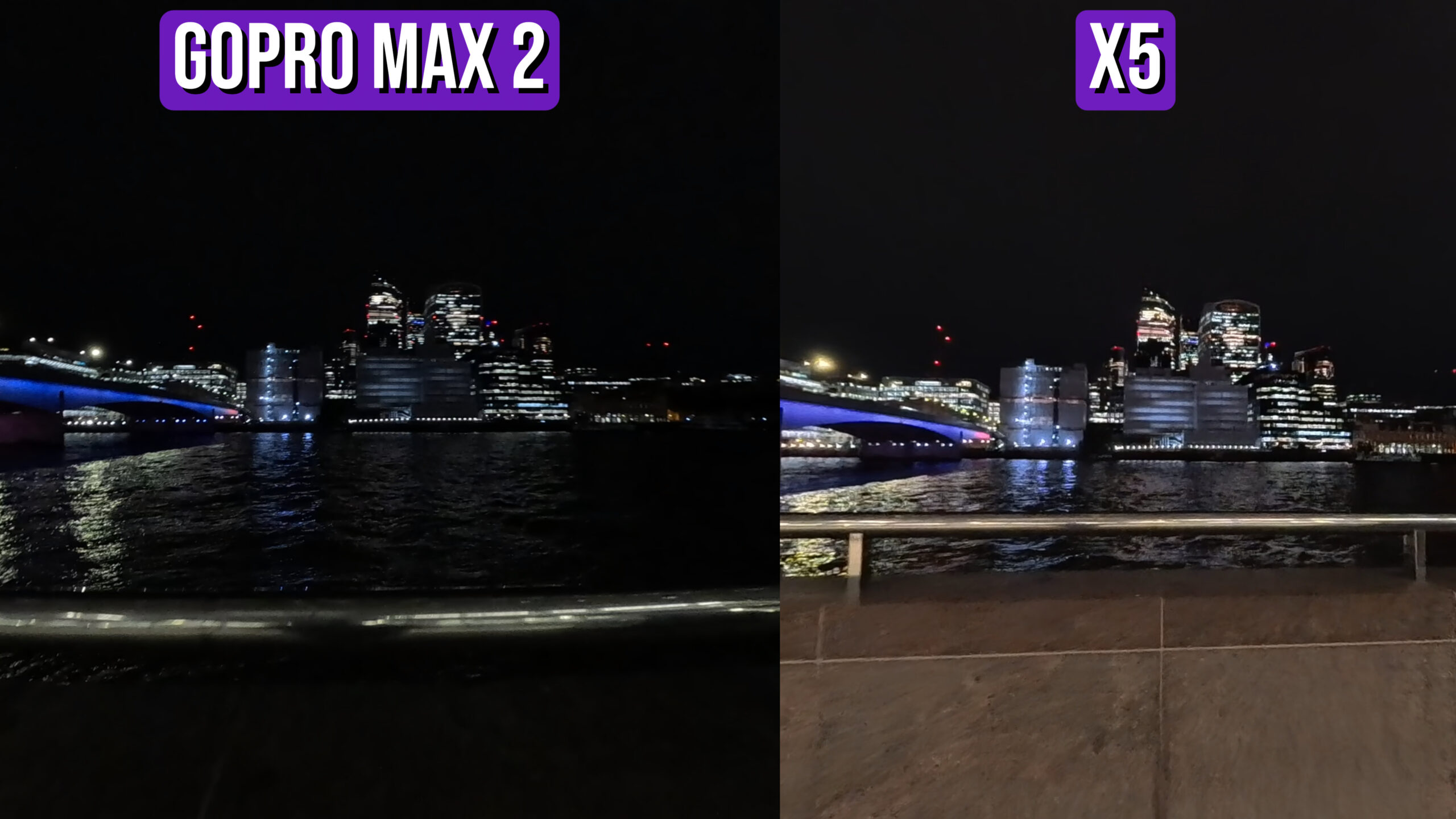
The Insta360 X5 handles low light far better, especially when using its PureVideo mode, which boosts light sensitivity and reduces noise without overexposing highlights. The results are noticeably cleaner, particularly around streetlights and illuminated buildings.
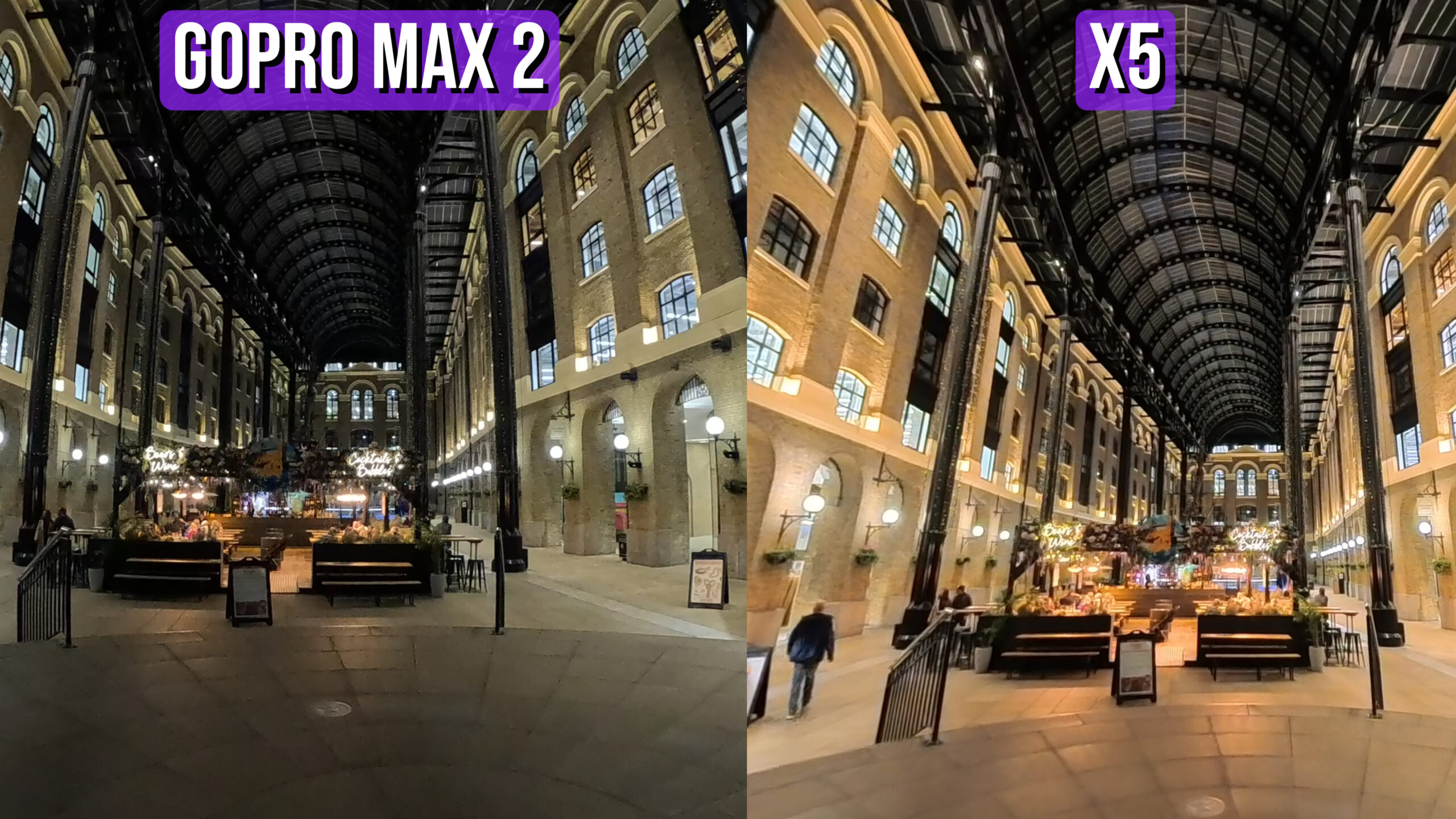
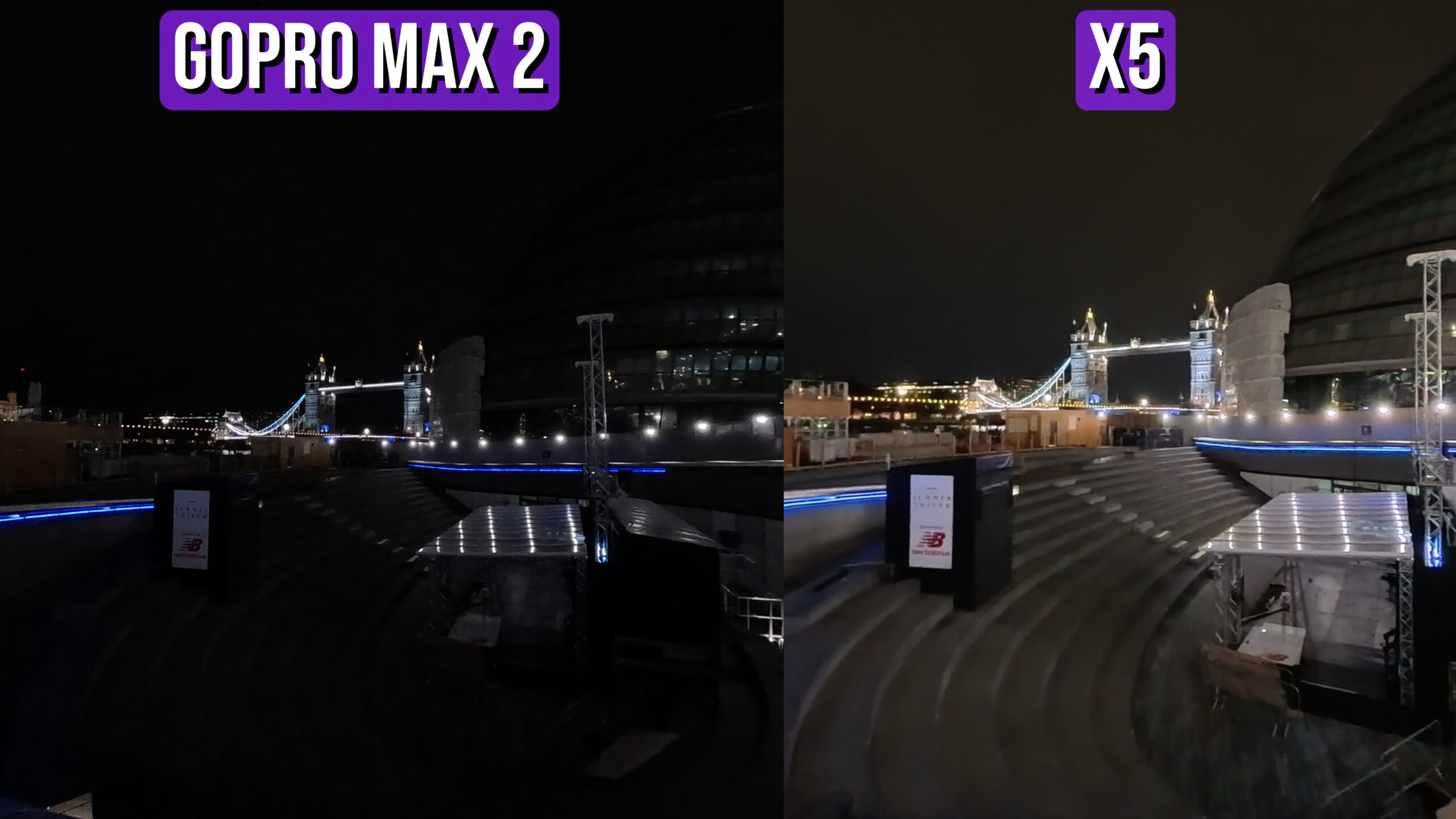
If you plan to shoot at night or indoors, the X5 wins comfortably here.
Shooting Modes
Both cameras double as 360 and standard action cameras, but their flexibility differs.
The GoPro Max 2’s single-lens mode shoots in crisp 4K at 60fps, with up to 100fps in slow-motion. It’s simple, fast, and perfect for action sports or POV footage.
The Insta360 X5 offers more creative options including 4K at 120fps for super-slow-motion, Bullet Time, HDR video, time-lapse, and hyperlapse modes.
For action-focused users, GoPro’s simplicity is ideal. For creative storytelling and social-media-ready content, Insta360’s versatility is unmatched. I personally think the Insta360 Timeshift (also known as hyperlapse) is one of it’s best shooting modes, and works far better than the similar mode in the GoPro Max, mostly thanks to the inclusion of motion blur.
One big advantage of the X5 is it’s no-editing shooting mode, which allows you to skip the re-framing. It’s useful for some
Photo Quality
When it comes to stills, the X5 wipes the floor with the GoPro.
Its 72-megapixel HDR photos look detailed, vibrant, and dynamic. Shooting in RAW gives you full control in post-processing, something the GoPro simply doesn’t offer.
The GoPro Max 2’s 29MP 360 photos are fine for quick sharing but lack the detail and dynamic range serious photographers want.
Audio
GoPro has always nailed onboard audio, and the Max 2 continues that trend. Its six-microphone array captures immersive spatial sound with minimal wind interference which I’ve found to be ideal for vlogging or action commentary.
The Insta360 X5’s mics are decent but not as full-bodied, although on one side of the camera you’ll find a wind guard which will help you record in all conditions. You can use an external mic via adapter, but out of the box, GoPro wins this round. Insta360 has an audio accessory which is far superior and I would recommend if you intend to record vlogging videos.
Software & Editing
Here’s where the Insta360 X5 pulls ahead in a big way.
The Insta360 app is by far the most comprehensive 360 editing platform. You can reframe, auto-track, add transitions, apply hyperlapses, and create full length videos with text, transitions and colour editing – all on mobile. It also uses AI features like Shot Lab, which automatically generates creative edits provided you follow the shooting instructions.
It’s not perfect and there is a big learning curve, but once mastered, it offers unmatched flexibility.
The GoPro Quik app is smoother and simpler but more limited. Key features like speed ramping and advanced colour control sit behind a subscription paywall, and you have to download footage before editing (I find this very annoying). It’s fine for quick edits but not ideal for creators.
On desktop, Insta360 Studio is also miles ahead – a proper editor with transitions, text overlays, and colour tools. GoPro Player is basic by comparison and better used as a conversion tool before importing into Premiere Pro or DaVinci Resolve.
Design & Handling
Physically, these cameras take different approaches.
The GoPro Max 2 has a compact, square body which means it’s pocket-friendly, easy to mount, and compatible with a huge range of GoPro accessories. Its biggest advantage? Tool-free, twist-and-go replaceable lenses. If you crack a lens mid-shoot, you can swap it in seconds.
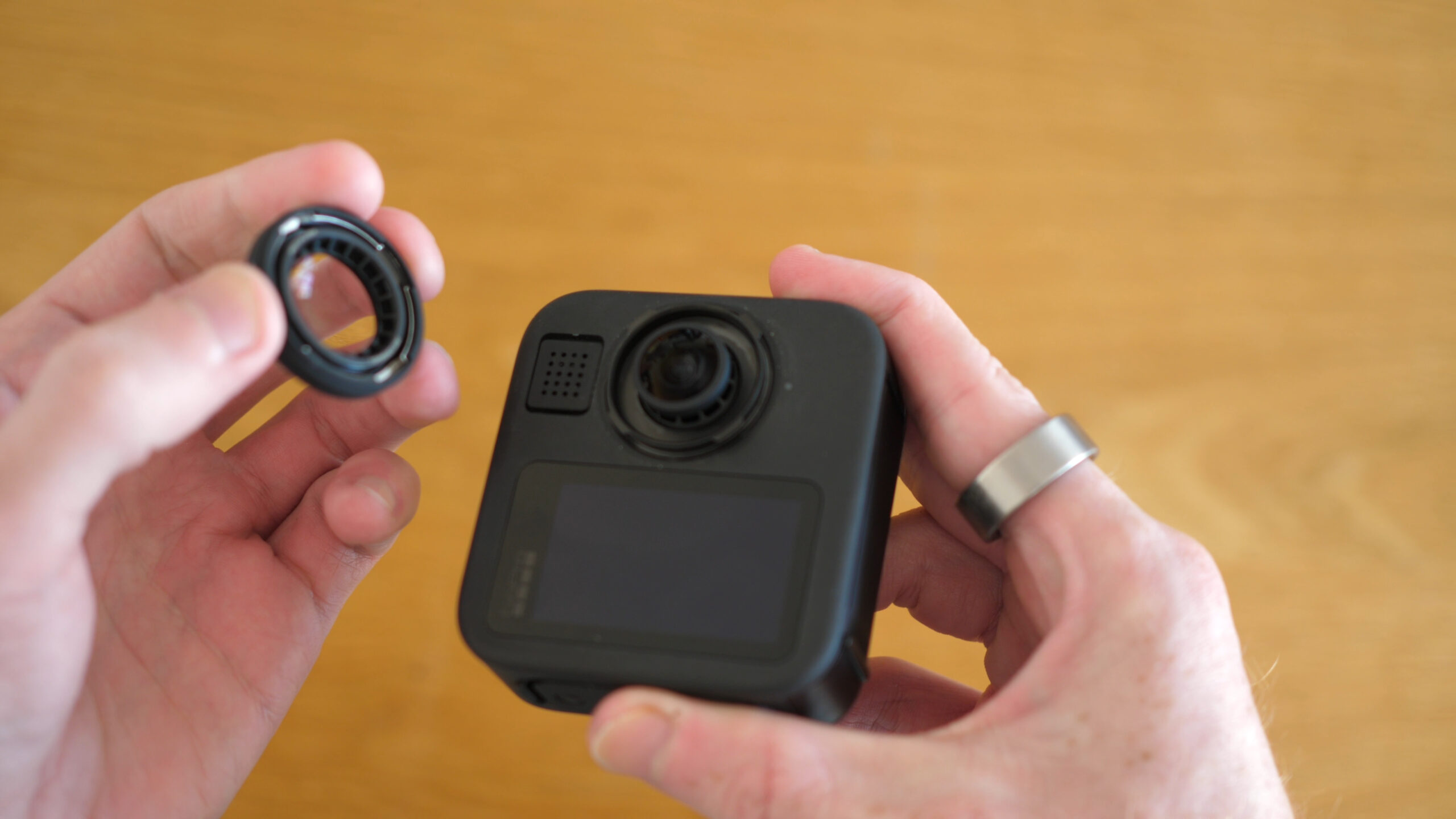
This makes the GoPro an excellent choice for the most risky shots where your lenses could get damaged, With the Max 2 you can replace them on the spot within a few seconds.
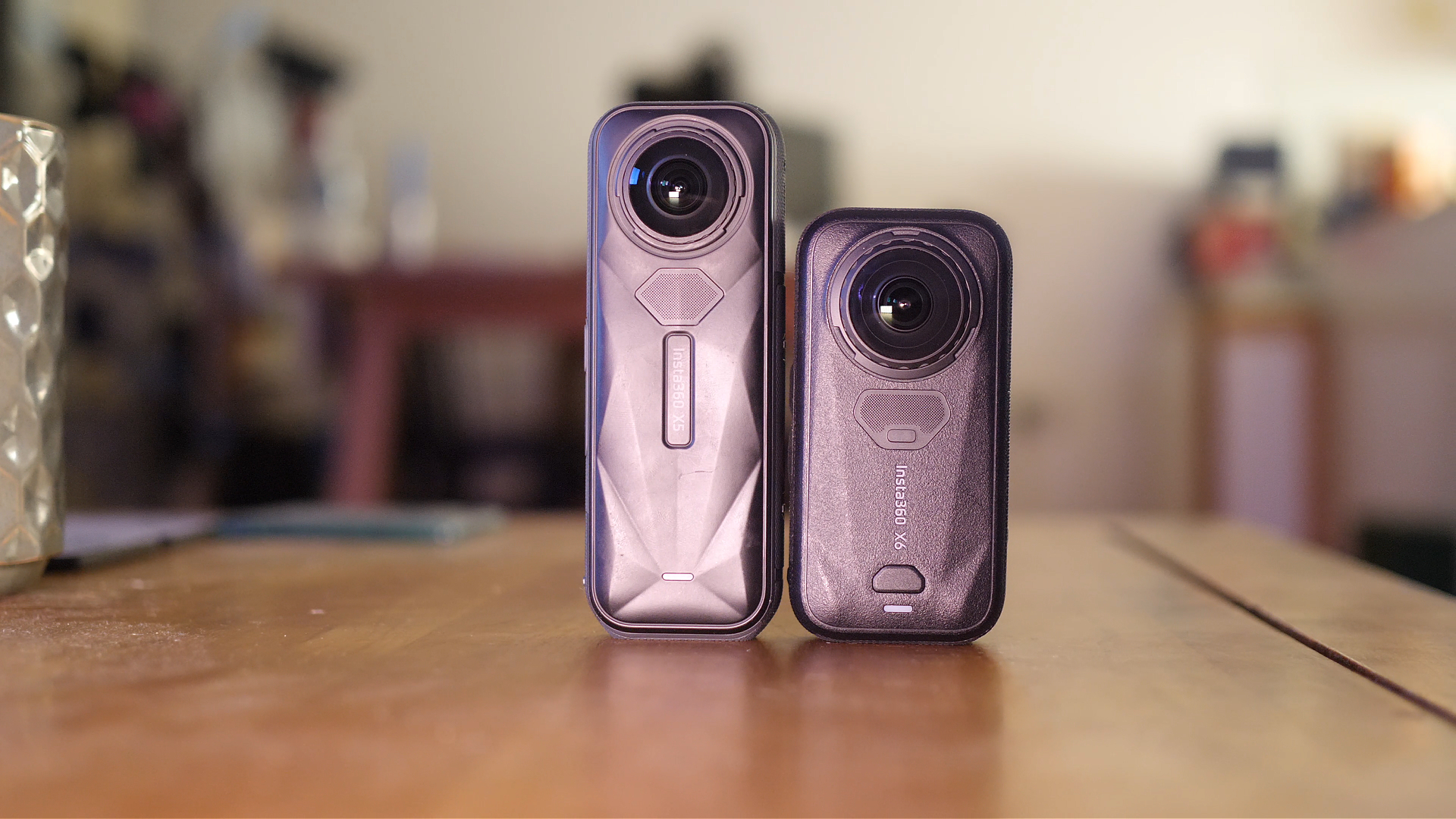
The Insta360 X5 is taller and more rectangular, with a larger touchscreen that makes framing and playback easier. Its lenses are also replaceable, but you’ll need a special kit and a clean environment – not ideal mid-adventure.
Both are waterproof up to around 10 m, but only the X5 supports a dedicated dive case, making it the better option for underwater creators.
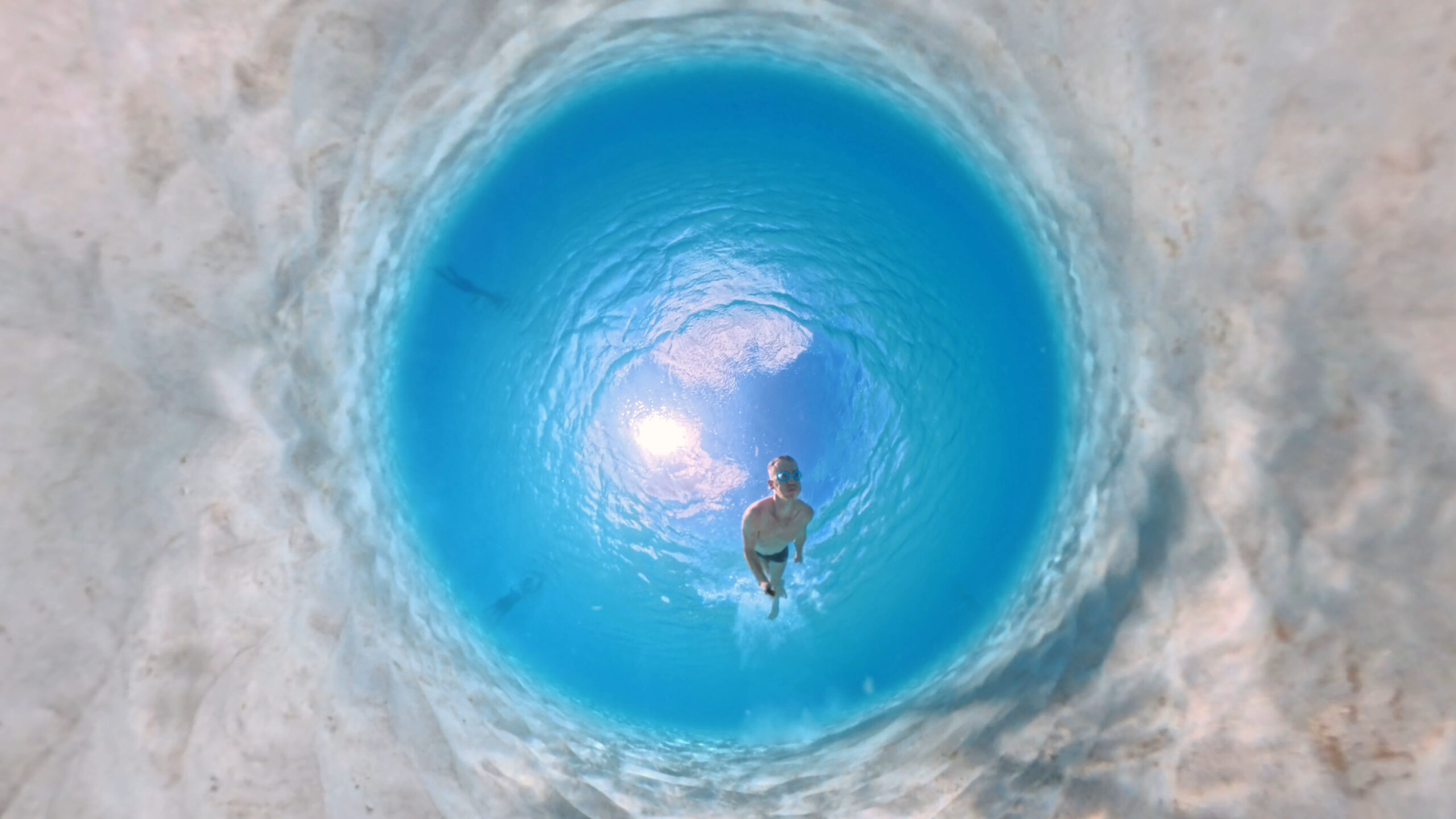
The above was shot with the X5 with its invisible dive case, a shot like this would not be possible with the Max 2 right now
Overall, the GoPro feels tougher and more “action-ready”, while the X5 feels more premium and creator-focused.
Price
Pricing can vary, but as of late 2025:
GoPro Max 2: around £549 / $499
Insta360 X5: around £649 / $599
The X5 is slightly pricier, but you’re paying for a richer software ecosystem and better low-light performance. The GoPro is better value if your focus is pure action sports.
Verdict: Which One Should You Buy?
If you’re mainly shooting action content in daylight, so mountain biking, skiing, or anything high-impact, the GoPro Max 2 is the smarter choice. Its quick lens replacement system, robust design, and realistic colour science make it the most dependable action-ready 360 camera right now.
However, if you’re more of a content creator or filmmaker who values creative modes, advanced editing, and strong low-light performance, the Insta360 X5 remains the best all-round 360 camera you can buy.
Think of it this way:
GoPro Max 2 → Adventure and reliability
Insta360 X5 → Creativity and flexibility
There’s no single winner unfortunately, but there’s a clear choice depending on how you shoot.
FAQ
Which has better video quality?
In daylight, both are excellent, but the GoPro looks slightly more natural. In low light, the X5 wins easily.
Which is better for beginners?
GoPro Max 2 – simpler controls and an easier learning curve.
Which is better for editing?
Insta360 X5 – the app and Studio software are far more advanced.
Which is more durable?
GoPro Max 2 – user-replaceable lenses make it ideal for rough conditions.
Which has better photo quality?
Insta360 X5 – 72 MP HDR and RAW easily outperform the GoPro.
Where to Buy
If you get the Insta360 X5 from the official site using the below link, then you’ll also get a free lens replacement kit thanks to a special offer for my readers
The GoPro Max 2 is available on the GoPro site internationally.


Owner of threesixtycameras.com. Writer, photographer and videographer. You can see my YouTube channel for guides of how to shoot 360 video. I've written for The Times, Digital Photography School and Sunday Express.