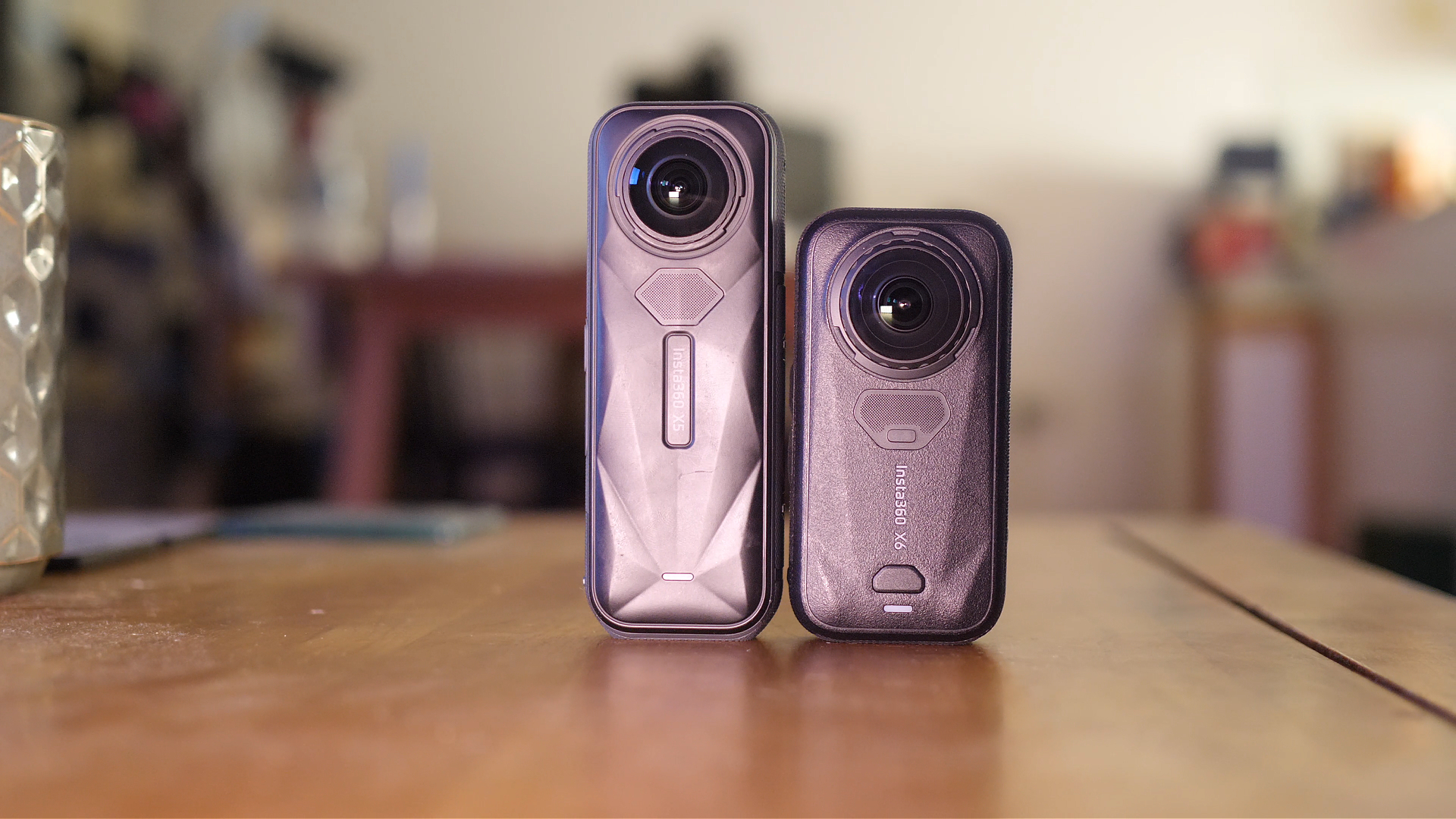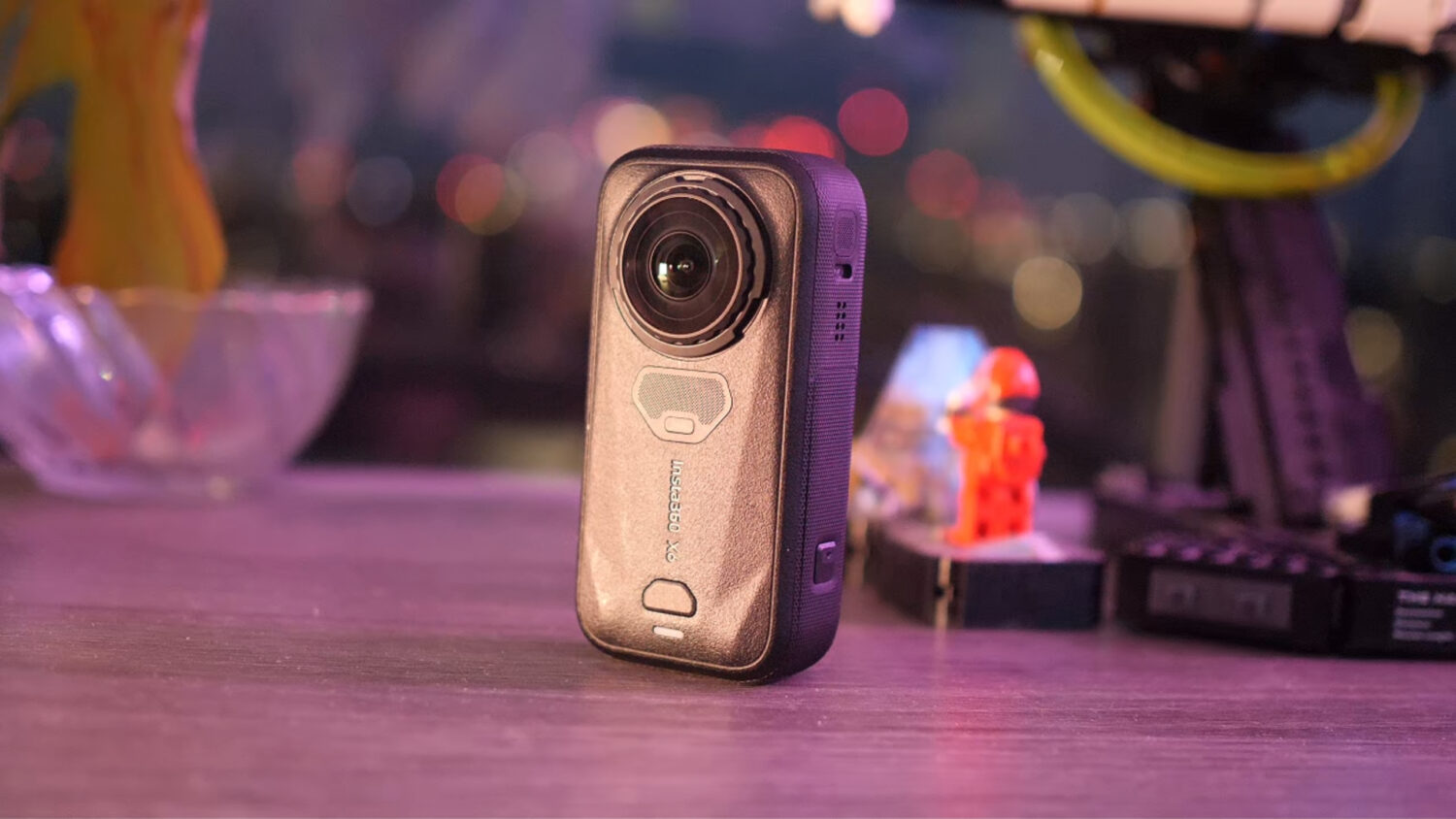
Since the Insta360 X4 hit the shelves, the buzz has really centered around how it measures up to the Insta360 1 Inch 360 Edition, particularly when it comes to low-light photography. Although the 1 Inch 360 Edition has been around for a while, its sizable 1-inch sensors still stand out, capturing significantly more light than its siblings. This makes it a champ in darker settings, even though its bulkier build isn’t exactly cut out for action-packed adventures like the X4 is designed for.
Now, the X4 is breaking new ground as the first consumer 360 camera to boast 8K video capabilities—quite the jump from its predecessors. It’s a legitimate question whether this sharp increase in resolution can compensate for its relatively smaller sensors when the lights go down.
Over the years, I’ve compared dozens of 360 cameras and documented my findings on my YouTube channel, where I’ve also launched an Insta360 Video Course teaching you how to create amazing content with your Insta360 camera. It’s been a fascinating journey to see how each model performs under various conditions, and I’m eager to share those insights.
Specs Comparison
| Feature | Insta360 X4 | Insta360 ONE RS 1-Inch 360 Edition | Winner |
|---|---|---|---|
| Video Resolution | Up to 8K (7680×3840) at 30 fps | 6K (6144×3072) at 25 fps | Insta360 X4 |
| Photo Resolution | 72MP (11968×5984) | 21MP (6528×3264) | Insta360 X4 |
| Sensor Type | 1/2 Inch Sensors | Dual 1-inch CMOS sensors, better in low light | Insta360 ONE RS 1-Inch 360 Edition |
| Stabilization | FlowState stabilization | FlowState stabilization | Tie |
| Max Video Bitrate | 200 Mbps | 120 Mbps | Insta360 X4 |
| Field of View | Adjustable modes | Adjustable with superior clarity due to larger sensors | Insta360 ONE RS 1-Inch 360 Edition |
| Battery Life | Up to 81 minutes at 8K 30fps | Approximately 62 minutes at 6K 30fps | Insta360 X4 |
| Waterproof | Up to 10 meters | Water-resistant, IPX3 | Insta360 X4 |
| Live Streaming | No | No | Tie |
| Audio | 4 built-in microphones | 3 built-in microphones | Insta360 X4 |
| Weight | 239 grams | Heavier due to modular design | Insta360 X4 |
| Photo Formats | JPEG, RAW | insp, RAW | Tie |
| Video Formats | Standard, LOG, HDR | insv, mp4, supports LOG and HDR | Tie |
| Display Type | Touchscreen | Touchscreen | Tie |
| Frame Rates | Up to 100 fps in 3K | Up to 50 fps in 3K | Insta360 X4 |
| Low Light Performance | Good | Excellent due to 1-inch sensors | Insta360 ONE RS 1-Inch 360 Edition |
Let’s dive into the design differences between these two Insta360 models. The 1-Inch 360 Edition boasts a modular design that divides into three parts. This setup isn’t just for show; it’s an add-on for the Insta360 One RS, which uses a bracket to secure the camera’s components firmly in place. Its standout feature is the large lenses, which give it a more pronounced profile than other models in the lineup.

However, the bulky lenses of the 1-Inch 360 Edition also make it more susceptible to damage if dropped. This vulnerability, coupled with its size, suggests it’s not the best fit for action-packed uses but rather for capturing high-quality still videos or for casual use during walks.
On the flip side, the X4 is sleeker, more compact, and tailor-made for action shots, vlogging, and various forms of content creation. It sacrifices sensor size for portability and agility—the sensors are half the size of those in the 1-Inch 360 Edition.

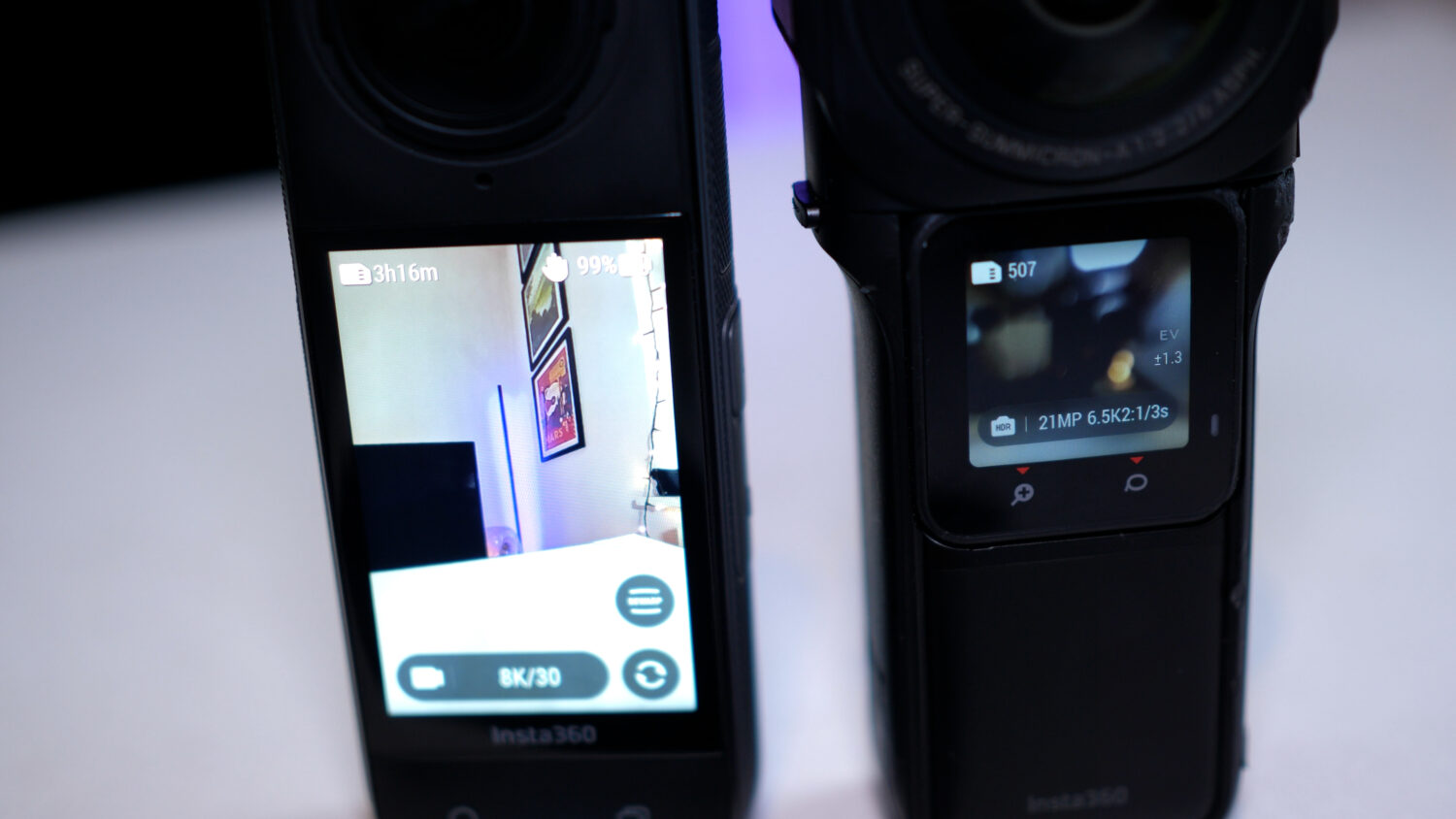
Using these cameras in the field, the X4’s user-friendly interface, underscored by its larger screen, stands out. I’ve found it makes operation smoother and more intuitive compared to the 1-Inch 360 Edition, which feels a bit clunky due to its smaller display.
Additionally, the modular design of the 1-Inch 360 means that tasks like swapping out the battery or SD card can be a bit cumbersome, requiring disassembly of the camera. This could be a slight hassle for users who prefer a more streamlined, quick-access setup.
Let’s dive into some side-by-side video comparisons to examine how each camera handles different lighting conditions. I’ll include screenshots labelled with the frame rates used for each camera to give you a clear picture of their performance.
You can see my video comparisons in action in the below video, or take a closer look at the screenshots in this post.
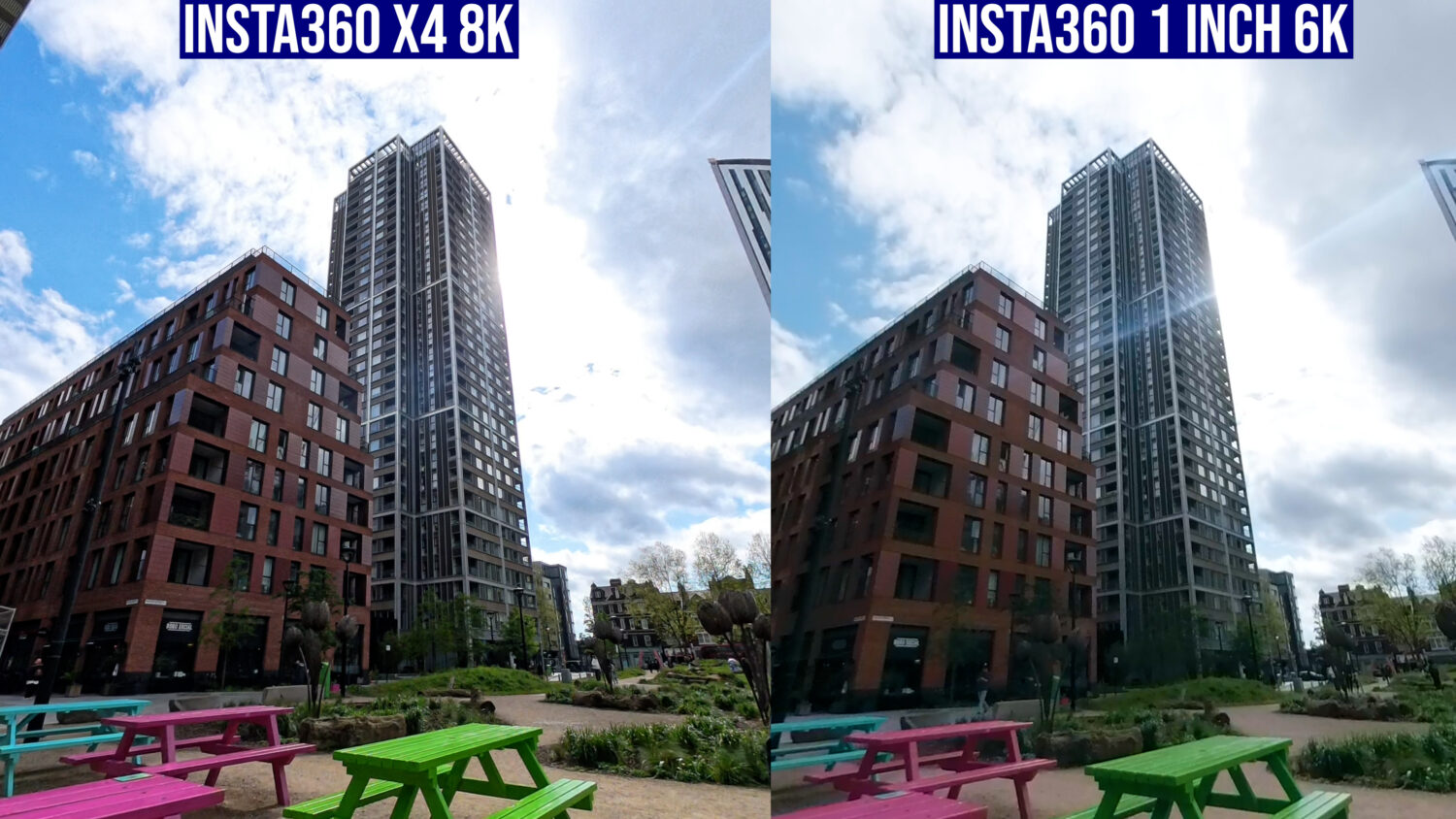
In daylight, which generally favours cameras with smaller sensors, I can see that the X4 shines with its ability to capture high-resolution 8K video. This results in footage that’s sharper and more detailed when reframed compared to the 6K capabilities of the 1 Inch-360. The color rendition is also worth noting—the X4 produces bolder and more dynamic colors, whereas the 1 Inch-360’s colors appear somewhat flatter.
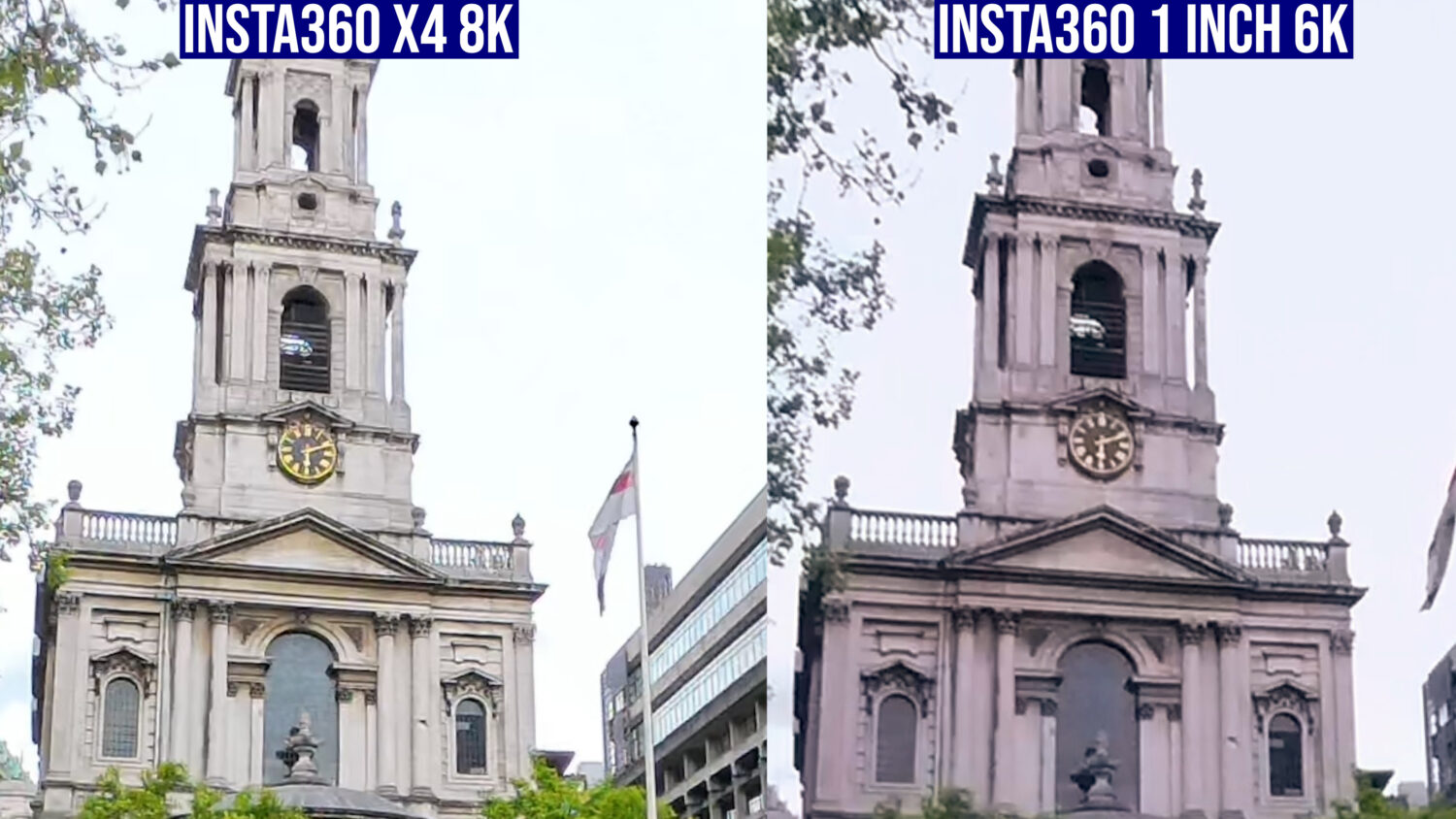
Moreover, the X4 offers a versatile range of resolution and frame rate options, including 5.7K at 60fps, 4K at 100fps, and 3K at 120fps. In contrast, the 1 Inch 360 is more limited, with just two settings: 6K at 30fps and 3K at 50fps.
Additional features of the X4, like the single lens mode, Me Mode, 8K timeshift, and 11K timelapse, add to its appeal. The 1 Inch 360 can also capture timeshift and timelapse videos, but only up to 6K resolution.
However, as the sun sets and artificial lighting takes over, the 1 Inch 360 begins to reveal the true potential of its 1-inch sensors. When I shot in low-light conditions such as dusk or night time with artificial lighting, both cameras perform similarly. But in the most challenging light settings, the 1 Inch 360 outshines the X4 due to its superior light capturing capabilities, revealing more detail and clarity.
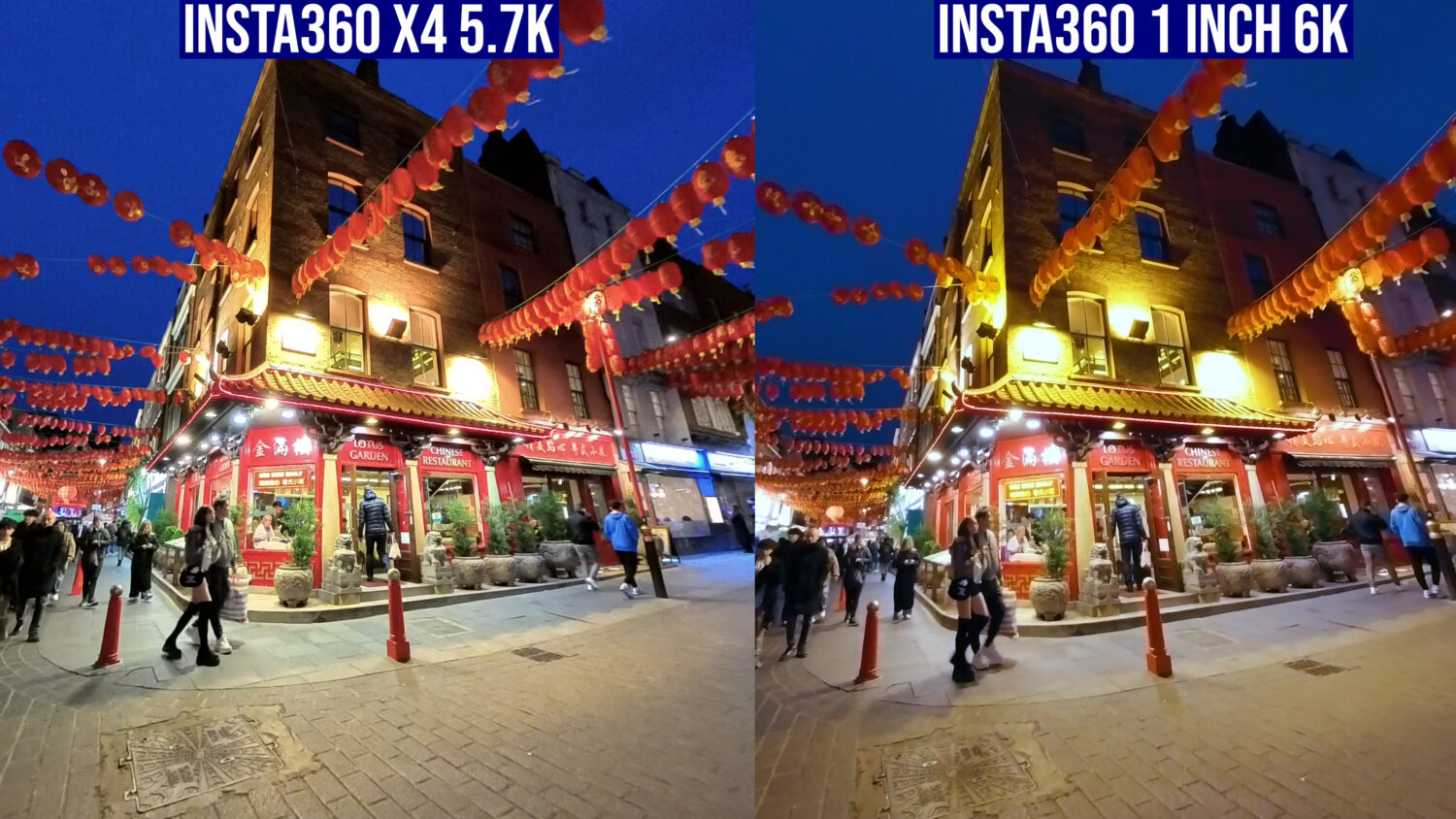
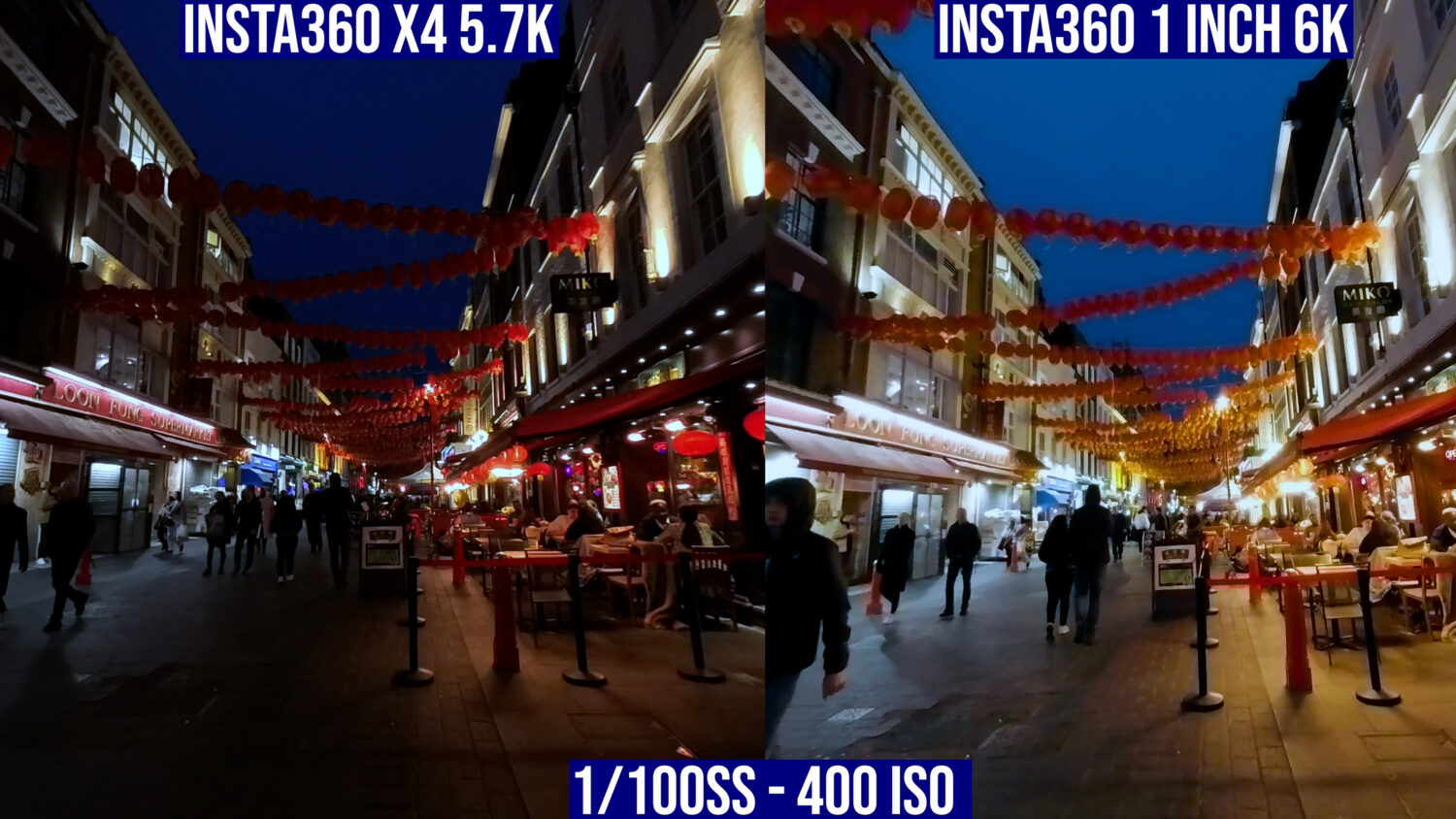
You might be curious about why I sometimes choose to shoot with the X4 at 5.7K in our comparisons, especially in lower light settings. The reason is pretty straightforward: the X4’s performance drops in low light when recording at its maximum 8K resolution. In fact, the camera itself might recommend switching to 5.7K in such conditions to optimize image quality.
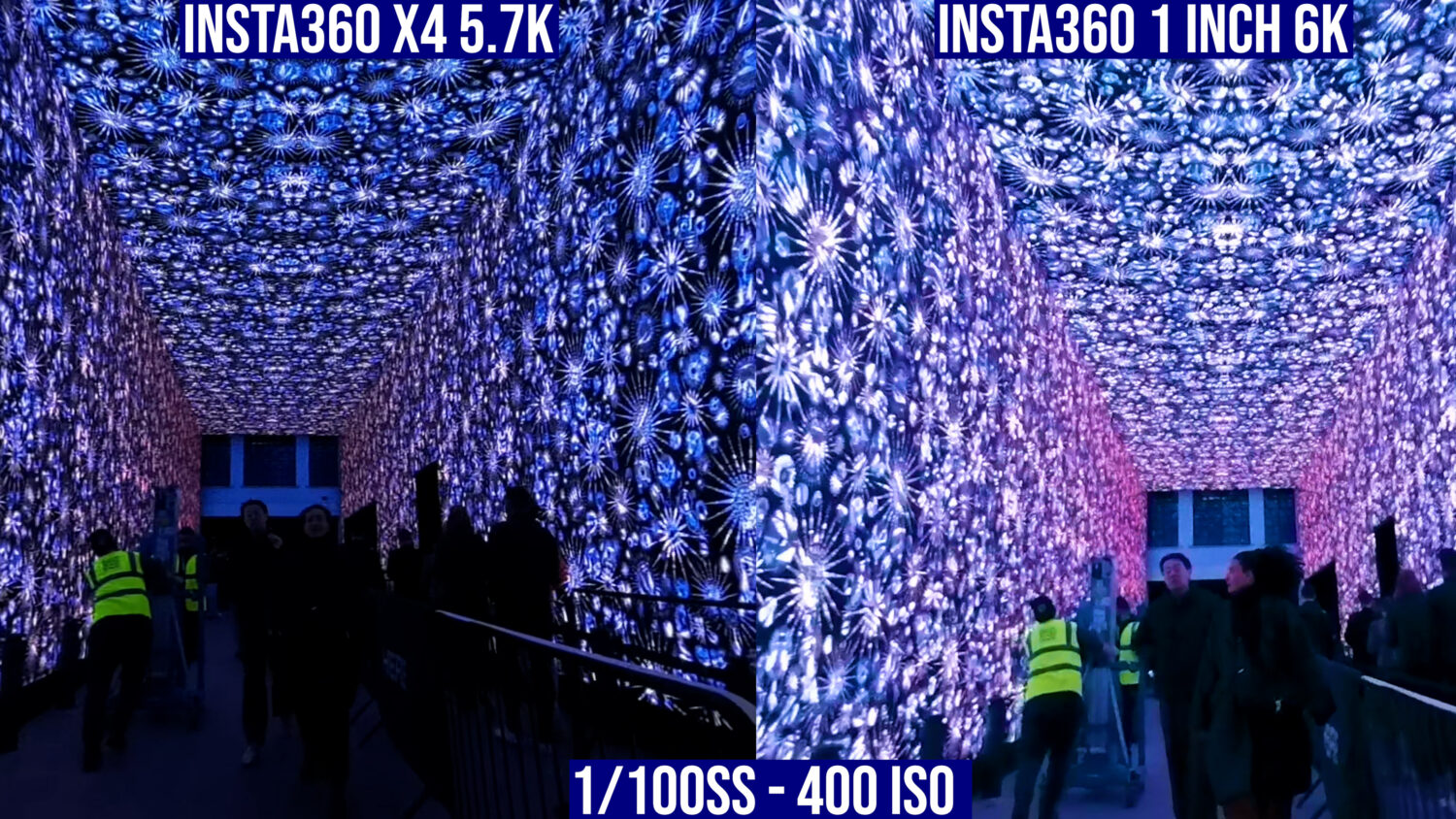
When stacking up the 8K footage from the X4 against the 1-Inch 360, the latter generally has a clear edge thanks to its larger sensors. However, when we dial down the X4’s resolution to 5.7K, these differences become less noticeable. This adjustment brings the X4’s capabilities closer to those of the 1-Inch 360, smoothing out the variance in performance between the two under less-than-ideal lighting conditions.
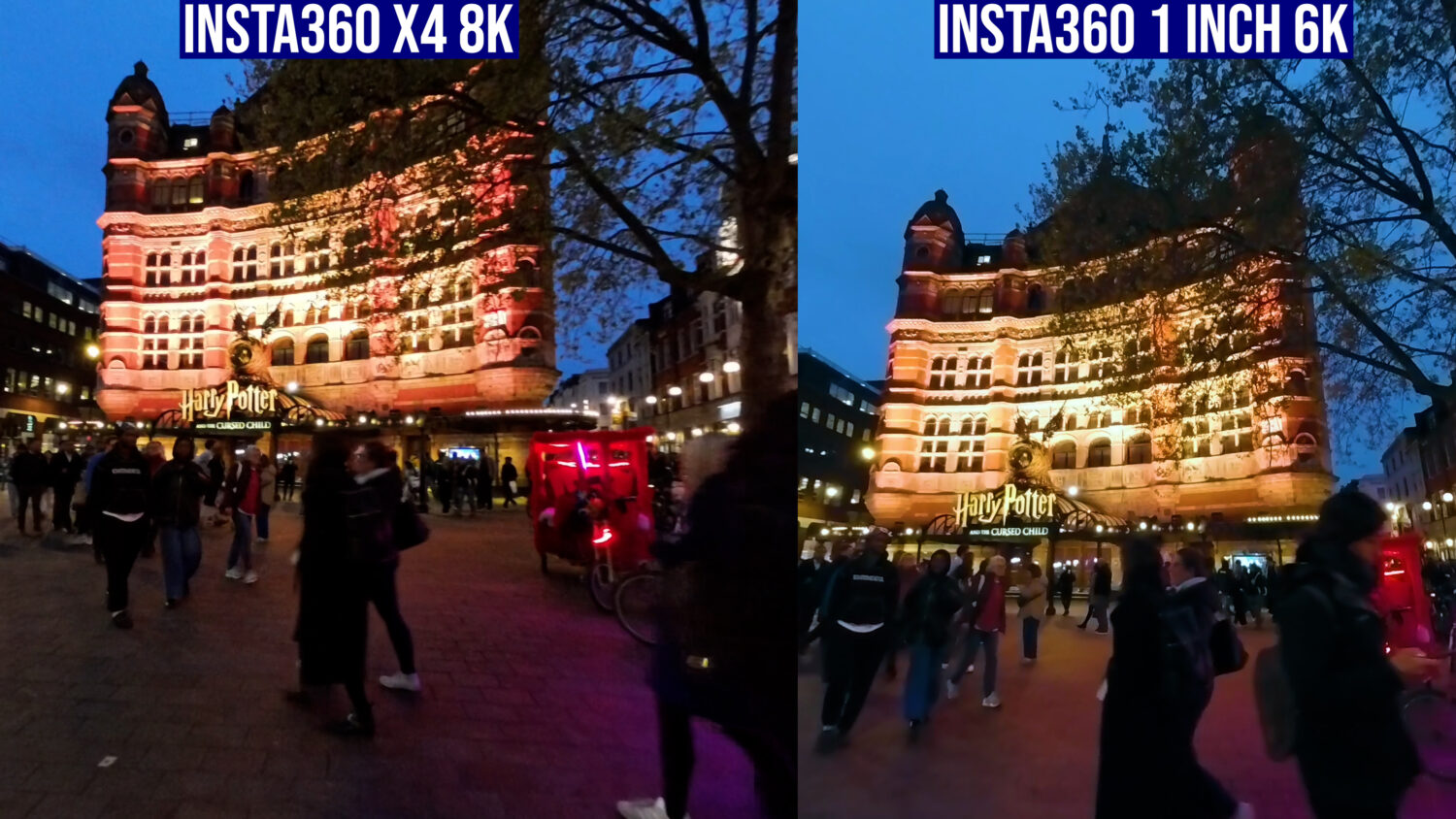
Despite these specific advantages in low-light scenarios, the X4 generally proves to be more capable and versatile, producing better-looking videos in most conditions.
What About 360 Photos?
While many opt for these cameras primarily for video, shooting 360 photos—often for virtual tours—is also a popular use. I’ve taken a range of 360 images with both the X4 and the 1-Inch 360 to compare their performance.
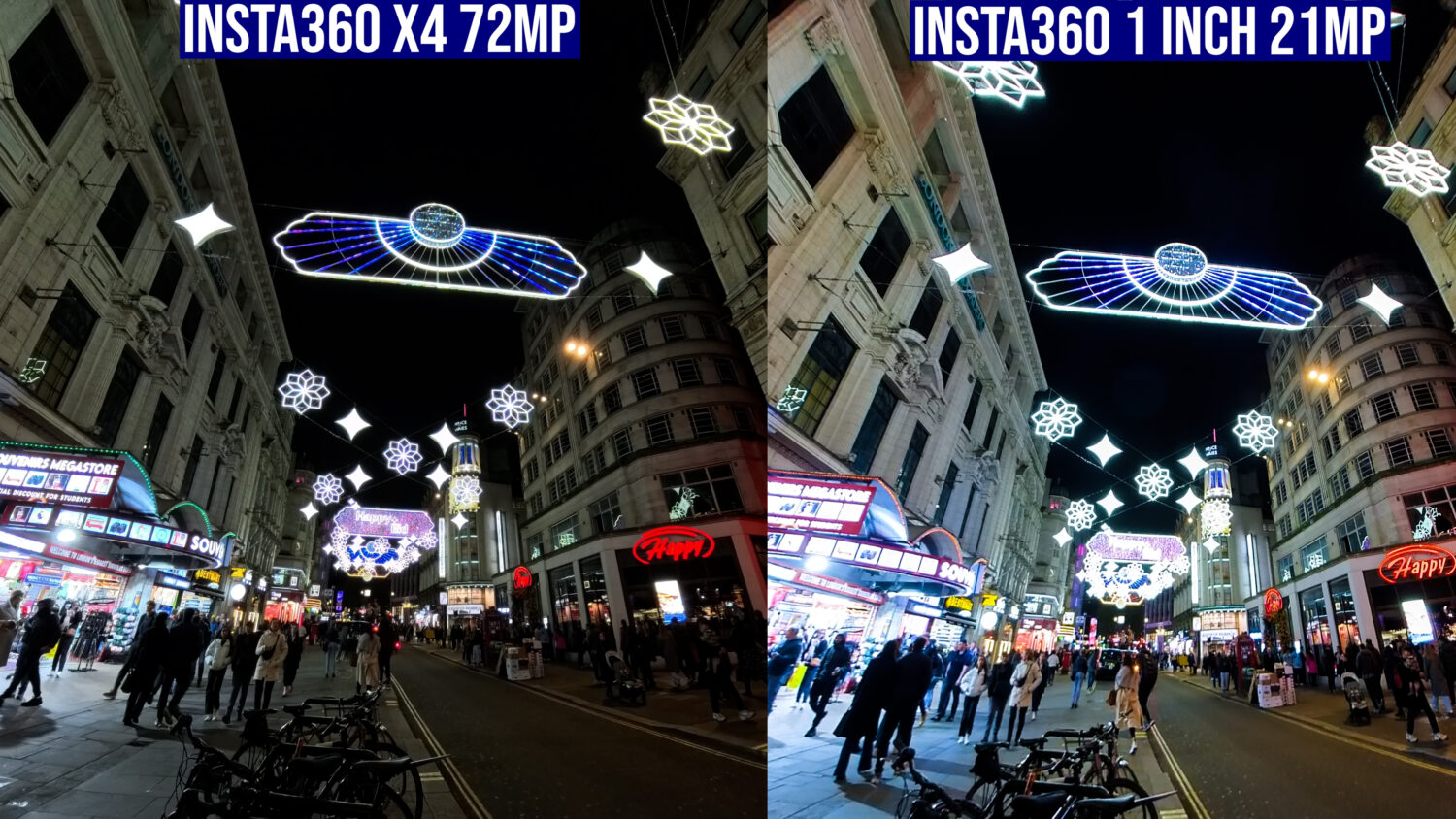
The X4 stands out with its capability to shoot large 72MP images, which is ideal for maintaining clarity even when you need to zoom in. It also offers a HDR mode and an automatic Pureshot setting, enhancing the dynamic range directly through its in-camera processing.
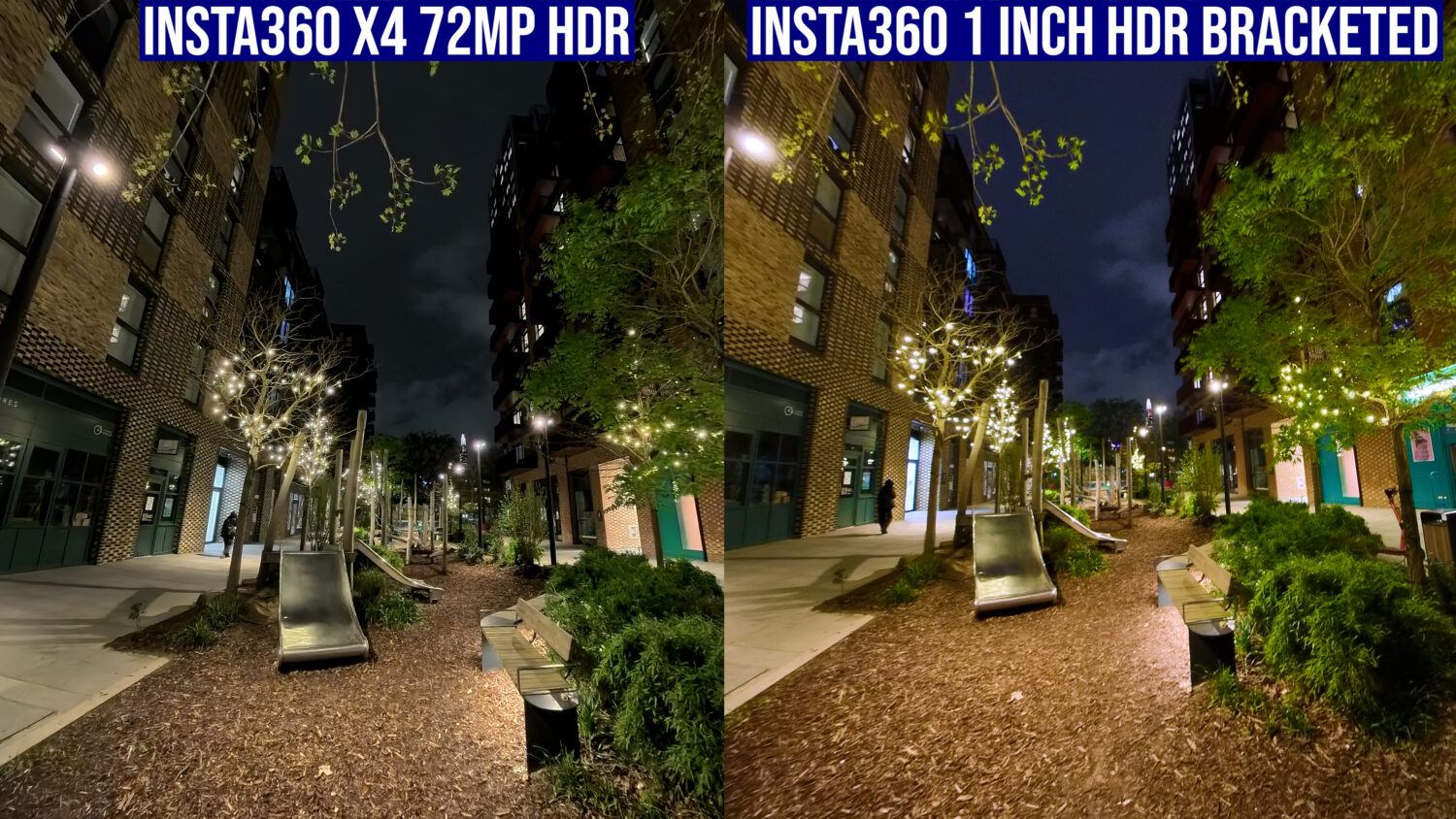
On the other hand, the 1-Inch 360 Edition brings its own strengths, especially with its larger 1-inch sensors that naturally capture more light and detail. This model goes a step further by offering the ability to shoot bracketed HDR images, essentially doubling the number of exposures to craft the highest quality photo possible. Unfortunately, the X4 lacks this particular mode.
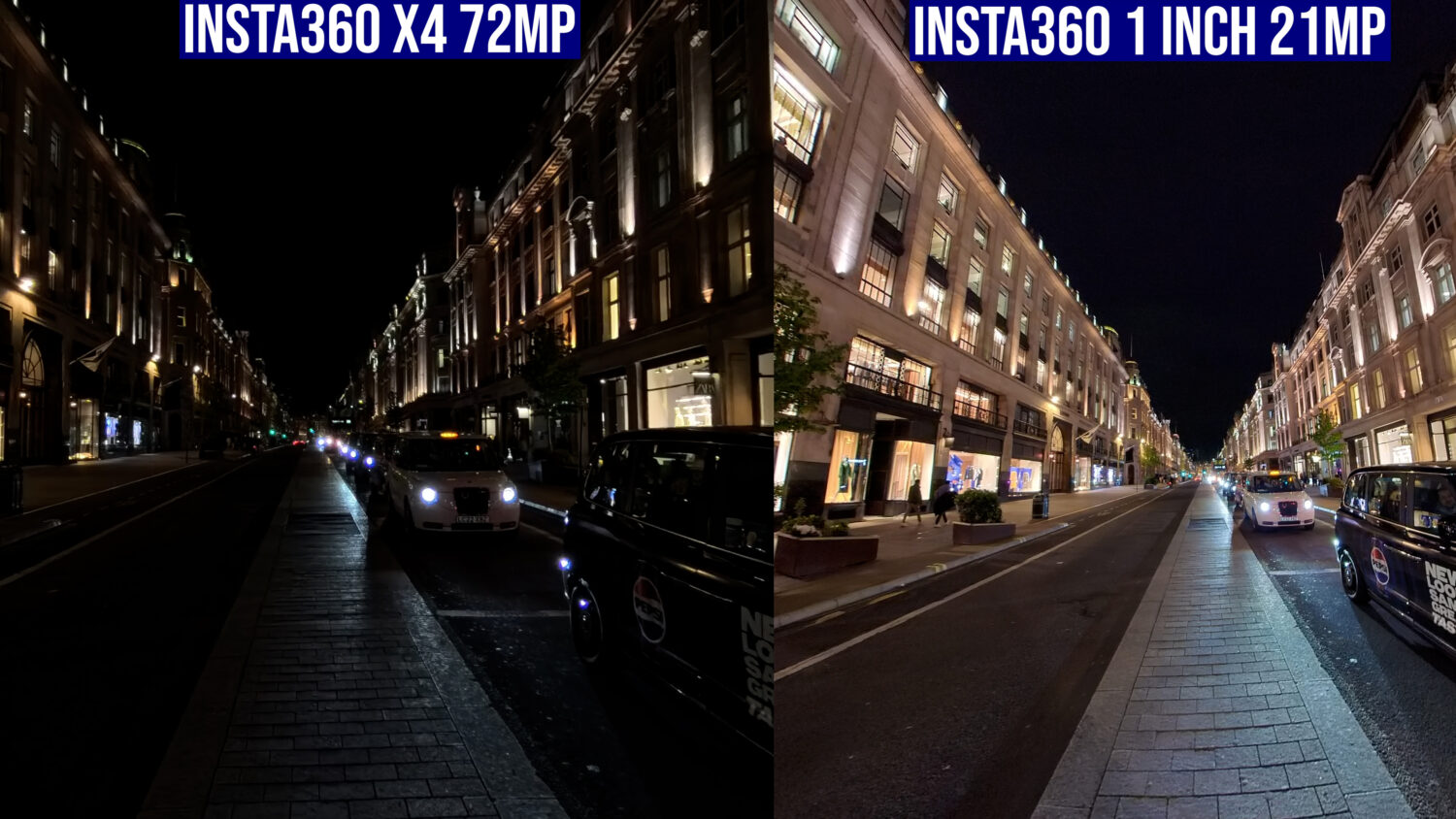
In my experience, you’ll likely find that the 1-Inch 360 Edition excels in low-light conditions (and therefore probably works better indoors too), though the difference might not be significant unless you’re dealing with particularly challenging scenarios.
Which Should You Buy?
After comparing the two cameras, I would find it difficult to recommend the 1-Inch 360 over the X4. The X4’s 8K resolution and advanced chipset open up a broader array of video modes and frame rate options. In daylight conditions, this allows the X4 to generally surpass the 1-Inch 360 Edition in performance.
It’s also hard to ignore the X4’s sleeker design which contributes to its ease of use, contrasting with the bulkier and somewhat cumbersome design of the 1-Inch 360. It’s also worth noting that the X4 is more budget-friendly, often costing a few hundred dollars less than the 1-Inch model.
The 1-Inch 360 might only be preferable for those specifically needing superior performance in very low-light conditions without much artificial lighting; otherwise, the X4 tends to be the more advantageous choice in nearly all aspects.
Where to Buy
The Insta360 X4 is available from the Insta360 website which ships to all countries. Using the link below you’ll also get a free invisible selfie stick – an offer not available on Amazon or other vendors.

The Insta360 1-Inch 360 Edition is out of stock on the Insta360 website and has ben for some time, however it’s still available from Amazon.